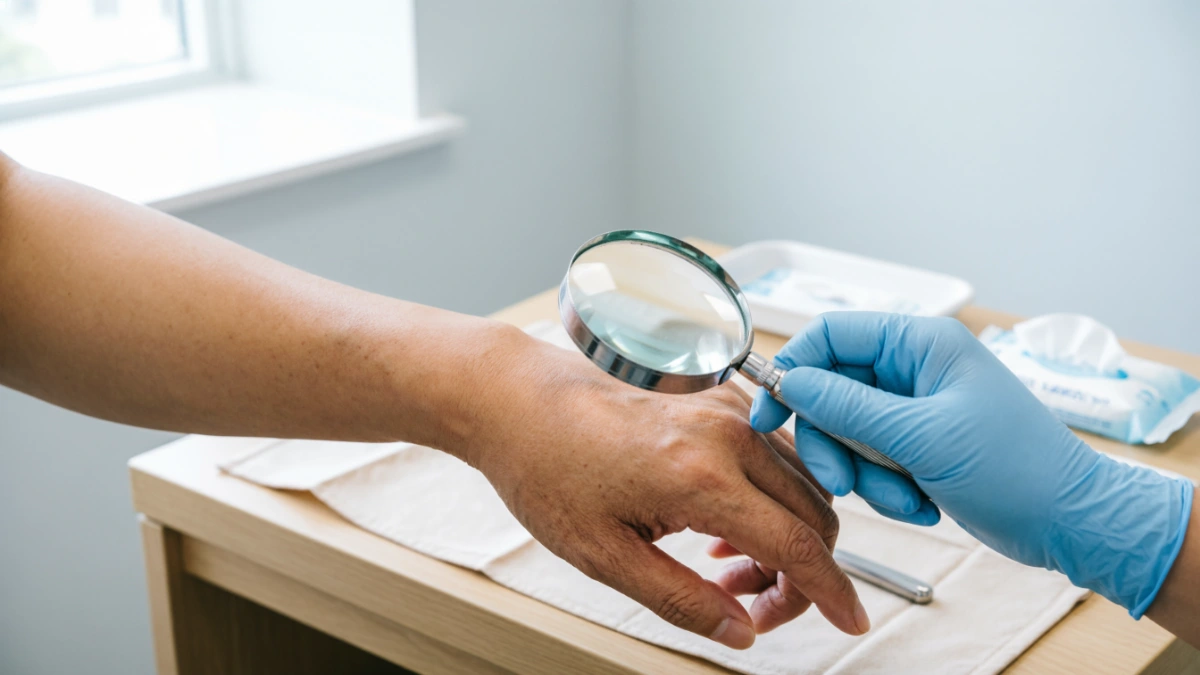
Scabies usually looks like tiny red bumps, thread-like burrows, or pimple-like spots that show up in clusters on the wrists, between the fingers, around the waist, or in skin folds, and it comes with intense itching that gets worse at night. Because the mites causing it are microscopic, what you actually see on your skin is your body’s allergic reaction to them, not the mites themselves.
This matters because scabies is often confused with eczema, bug bites, or allergies, which delays treatment and lets it spread to family members, roommates, or partners. Below, you’ll learn exactly what scabies looks like at every stage, on different skin tones and body parts, what causes it, how long it lasts, and how to get rid of it for good.
Quick Answer:
Scabies appears as small, itchy, red or skin-colored bumps that may look like pimples, hives, or insect bites, often arranged in a line or cluster. You may also see thin, grayish, thread-like burrows a few millimeters long. It typically shows up between the fingers, on the wrists, elbows, waistline, and around the genitals in adults, while babies and young children often get it on the palms, soles, scalp, and face. The itching is usually worse at night.
How Can I Tell If It’s Scabies?
The strongest clue is the combination of two things happening together: intense itching that’s worse at night, and small bumps or thin burrow lines in classic locations like the finger webs, wrists, elbow creases, waistband area, or around the nipples and genitals. A single itchy bump is probably not scabies. Multiple itchy bumps in these areas, especially if someone you live with or share a bed with has a similar rash, are a strong signal. A healthcare provider can confirm it by examining the skin and, in some cases, scraping a burrow to check for mites under a microscope.
What Are the First Signs of Scabies?
The earliest sign is usually itching, which can start before any visible rash appears. Small red bumps or fine burrow lines typically follow, most often between the fingers, on the inner wrists, or around the waist. If you’ve never had scabies before, these first signs can take two to eight weeks to appear after you’re exposed, because your immune system needs time to react to the mites. If you’ve had scabies previously, symptoms can return within one to four days of a new exposure since your body already recognizes the trigger.
What Does Day 1 of Scabies Look Like?
On the actual first day of infestation, your skin usually looks completely normal. This is one of the most misunderstood facts about scabies: the mites are burrowing under the skin, but your immune system hasn’t reacted yet, so there’s no visible rash and often no itching for the first several weeks in a new infestation. This “silent” period is part of why scabies spreads so easily; people are contagious well before they know anything is wrong.
What Does Scabies Look Like When It First Starts?
Once symptoms do begin, scabies usually starts small: a handful of pink or red bumps, sometimes with a faint raised line nearby (the burrow), concentrated in one or two areas like the hands or waist. It can look like a mild case of hives, a heat rash, or a few insect bites at this stage. Itching, especially at night, is usually the symptom that makes people take notice before the rash becomes widespread.
What Do Scabies Look Like to the Human Eye?
To the naked eye, scabies looks like small red or pink bumps, sometimes with tiny fluid-filled blisters, arranged in a rash that can be scattered or lined up along a burrow track. <cite index=”9-1″>Burrows themselves look like tiny raised, crooked lines on the skin surface, and they can be grayish-white or skin colored.</cite> You cannot see the actual mite without magnification; it’s about the size of a pinpoint, so what you’re really seeing is the burrow and your skin’s inflamed reaction around it.
Pictures of Scabies: What the Rash Commonly Looks Like
Because scabies presents differently depending on skin tone, age, and how long the infestation has gone untreated, “typical” photos vary a lot. In general, expect to see clusters of small red or skin-toned bumps, occasional thin burrow lines, and areas where scratching has caused scabs or thickened skin. In more advanced or crusted cases, thick, scaly patches can develop. If you want to compare your rash to reference photos, dermatology-focused medical sites and your own healthcare provider are the safest, most accurate sources, since image quality and accuracy vary widely across the open web.
What Does Scabies Look Like on the Face?
In adults, scabies rarely affects the face, head, neck, palms, or soles; the mites generally avoid these areas because the skin is different from the rest of the body. Babies and very young children are the exception; they can develop scabies bumps or blisters on the face, scalp, and neck. If an adult has a persistent itchy rash on the face, it’s more likely to be another skin condition, though it’s still worth having a provider rule out scabies, especially in cases of crusted scabies, which can spread more widely.
What Does Scabies Look Like on Black Skin?
<cite index=”2-1″>On darker skin tones, scabies bumps may appear skin colored, lighter than the surrounding skin, or darker than the surrounding skin, rather than the pink or red color typically described in lighter skin.</cite> This can make scabies harder to spot and easier to mistake for other conditions like eczema or dry skin patches. Because color changes are more subtle, texture becomes a more reliable clue: feel for small raised bumps or thread-like burrows in the classic locations (finger webs, wrists, waistline) rather than relying on redness alone.
What Does Scabies Look Like on Hands?
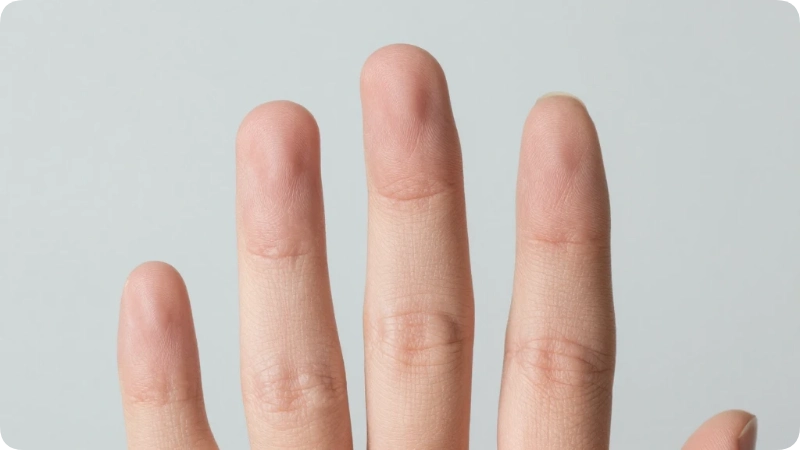
The hands, especially the webbing between the fingers and the sides of the fingers, are one of the most common places scabies appears in adults. Expect small red or skin-colored bumps, sometimes grouped in a line following a burrow, along with intense itching. In infants and young children, scabies can also appear on the palms as small blisters or pus-filled bumps, which is different from the typical adult pattern.
How Do You Get Scabies?
Scabies spreads through prolonged, direct skin-to-skin contact with someone who already has it. Holding hands for a long period, sleeping in the same bed, or close physical or sexual contact are the most common routes. It spreads far more easily between people who are in close contact for an extended time than through brief contact like a handshake. Less commonly, it can spread by sharing unwashed bedding, clothing, or towels shortly after an infested person used them, since the mites can survive briefly off the body.
Scabies Rash: What Adults Typically Notice First
For most adults, the rash shows up as small itchy bumps around the wrists, finger webs, elbows, waist, or genital area, often before it’s recognized as scabies. It can look similar to a bug bite rash or mild allergic reaction at first, which is why many adults initially try allergy creams or antihistamines before seeking a proper diagnosis. Persistent, worsening night-time itching over one to several weeks despite home treatment is the biggest red flag that it isn’t a simple allergy.
What Gets Mistaken for Scabies?
Several common skin conditions share features with scabies, which makes self-diagnosis unreliable. Here’s a quick comparison:
| Condition | How It’s Similar to Scabies | Key Difference |
| Eczema (atopic dermatitis) | Itchy, red, scaly patches | Usually no burrows; often a personal or family history of eczema |
| Contact dermatitis / allergic reaction | Red, itchy bumps or hives | Tends to appear where skin touched an irritant, not in classic scabies zones |
| Bed bug or mosquito bites | Small itchy red bumps | Often appears after a specific exposure (travel, camping); no burrows |
| Folliculitis | Small pimple-like bumps | Centered around hair follicles, not skin folds |
| Psoriasis | Scaly, sometimes itchy patches | Thicker, well-defined plaques, often on elbows/knees/scalp |
If home treatment for one of these conditions isn’t working after a week or two, or itching is worse at night, it’s worth getting checked for scabies specifically.
What Is the Main Cause of Scabies?
Scabies occurs when a tiny, eight-legged mite called Sarcoptes scabiei burrows into the top layer of your skin, where it lives and lays eggs. The mite itself doesn’t directly cause the rash and itching. Instead, your immune system reacts to the mite, its eggs, and its waste trapped in your skin. This is why symptoms can take weeks to appear after your first exposure.
What Is the Root Cause of Scabies?
At the root, scabies happens because of close physical contact with an infested person, not because of poor hygiene, dirty living conditions, or anything about a person’s cleanliness. Anyone, regardless of income, cleanliness, or living situation, can get scabies simply through prolonged skin contact. Crowded living situations, shared beds, and close-contact caregiving increase the chance of exposure because they increase the length and frequency of skin contact.
How Did I Suddenly Get Scabies?
Scabies can feel sudden because the itching and rash often appear weeks after the actual exposure, especially the first time you get it. You may not connect your current symptoms to a hug, shared bed, or physical contact from a month or more ago. If you’ve had scabies before, though, a new exposure can cause symptoms within just a few days, which can feel more obviously “sudden.”
Where Is the Most Common Place to Catch Scabies?
Scabies spreads most easily in settings involving prolonged, close skin contact: shared households, intimate or sexual partners, childcare settings, nursing homes, and crowded facilities like shelters or dormitories. Outbreaks are more likely wherever people are in extended physical proximity, rather than in any single “dirty” location. It is not typically caught from brief public contact, like sitting on a bus seat or shaking hands.
Is Scabies a Serious Problem?
For most healthy people, scabies is uncomfortable and disruptive but not dangerous, and it clears up with proper treatment. The condition can become more serious when scratching creates open sores that develop infections. A severe form called crusted (Norwegian) scabies can also cause complications. It involves many more mites, thick crusted skin, and a much higher risk of spreading to others. Crusted scabies is more common in people with weakened immune systems, older adults, or those with reduced ability to feel or respond to itching, and it needs prompt medical treatment.
What Organ Does Scabies Affect?
Scabies affects the skin, specifically the outer layer (epidermis), rather than any internal organ. The mites live and reproduce entirely within this top skin layer. The itching and inflammation are a whole-body immune reaction expressed through the skin, but scabies itself doesn’t infect internal organs.
What Are the 4 Stages of Scabies?
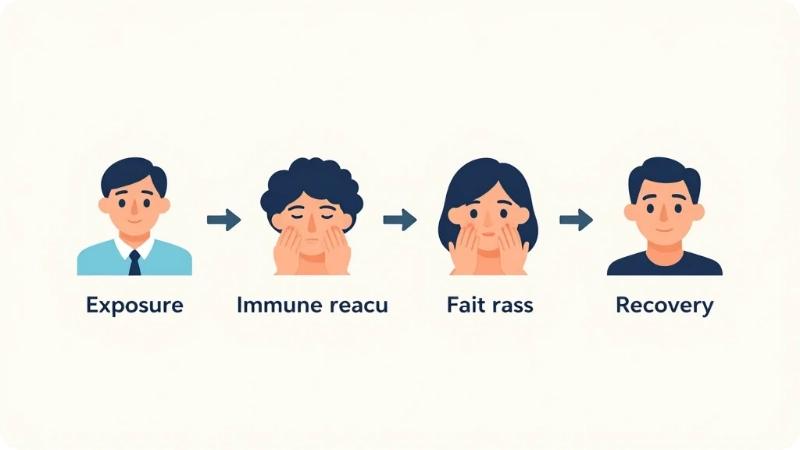
Whilethere’s no single official medical staging system, scabies is commonly described in these four practical phases:
- Exposure and silent burrowing – Mites transfer to the skin and begin burrowing; no visible symptoms yet.
- Sensitization – The immune system starts reacting; this is when itching and the first bumps or burrows typically appear (weeks later on a first infestation).
- Active infestation – Itching intensifies, especially at night, and the rash spreads to more classic locations as mites reproduce.
- Post-treatment recovery – After successful treatment kills the mites, itching and irritated skin can linger for several weeks while the skin heals from the allergic reaction.
How Long Does Scabies Last?
Without treatment, scabies doesn’t go away; it tends to persist and worsen, and it keeps spreading to close contacts. With proper medical treatment, a prescribed cream usually kills the mites within a day. However, itching and skin irritation may continue for two to four weeks as your immune system gradually settles the allergic reaction. That lingering itch after treatment does not automatically mean the treatment failed.
Will Scabies Go Away on Its Own?
No. Scabies mites don’t die off or leave on their own in a way that reliably clears an infestation; they continue to reproduce on the skin, and symptoms typically get worse and spread further without treatment. Waiting it out also increases the risk of spreading scabies to other household members or close contacts.
Do Scabies Ever Fully Go Away?
Yes. With appropriate treatment, you can fully clear a scabies infestation and eliminate the mites. Some people continue to experience itching for a few weeks afterward as the immune system calms down. This lingering itch does not necessarily mean mites remain, especially when you use the prescribed treatment correctly and repeat it as directed.
Is Scabies 100% Curable?
Yes. Scabies is considered fully curable with prescription treatment. Most cases resolve with one or two applications of a scabicidal cream or, in some cases, oral medication, spaced about a week apart to also kill any mites that hatch from surviving eggs. You can get scabies again if you come into contact with someone who has active, untreated scabies. However, this usually means you developed a new infestation rather than experiencing treatment failure.
How to Test for Scabies at Home?
There isn’t a reliable at-home test that can diagnose scabies on its own, since the mites are microscopic and easy to confuse with other rashes. What you can do at home is check for the pattern: look closely at the finger webs, wrists, and waistline for small bumps or thin burrow lines, and note if itching is worse at night. Some people try the “ink test,” gently rubbing washable ink over a suspected burrow and wiping it away. If a dark line remains in the burrow’s path, it can suggest a burrow is present, though this isn’t a formal diagnostic method. A definitive diagnosis still requires a healthcare provider, who can examine the skin closely or take a scraping.
How to 100% Get Rid of Scabies?
The most reliable way to fully clear scabies is a prescription scabicide, most commonly permethrin cream, applied to the entire body from the neck down (or the whole body in infants) exactly as directed, then repeated about a week later to catch newly hatched mites. Alongside skin treatment, wash bedding, clothing, and towels used in the past few days in hot water and a hot dryer, and treat all close household or intimate contacts at the same time, even if they aren’t itching yet. Skipping the second treatment or leaving a contact untreated is the most common reason scabies comes back.
What Is the Fastest Cure for Scabies?
Permethrin cream is generally considered the fastest and most reliable first-line treatment. When you apply it correctly, it can kill scabies mites on the skin within about a day. Oral ivermectin, prescribed in certain cases, works on a similar timeline and can be useful when cream application is difficult or for severe cases. Speed of full recovery still depends on completing the second treatment dose and treating close contacts simultaneously; skipping these steps slows things down regardless of which medication you use.
What Permanently Gets Rid of Scabies Forever?
No treatment provides lifelong immunity against scabies. You can get scabies again after a previous infestation has fully cleared if you have a new exposure. “Permanent” removal really means two things working together: completing the full prescribed treatment course (including the second application) to clear the current infestation, and reducing future risk by avoiding prolonged skin contact with anyone who has an active, untreated infestation.
Which Cream Is Best for Scabies in Pakistan?
Permethrin 5% cream is an internationally recommended first-line treatment for scabies. Pharmacies in Pakistan and many other countries commonly provide it by prescription. Doctors may also recommend benzyl benzoate lotion, especially when patients have limited access to permethrin. Because correct dosing, application technique, and safety depend on age, skin condition, and pregnancy status, it’s best to get a specific product recommendation from a local doctor or pharmacist rather than choosing a cream without medical guidance.
What Are the Home Remedies for Scabies?
No home remedy can cure scabies on its own. Prescription scabicides remain the only treatments proven to reliably kill scabies mites. Some people use measures like cool compresses, oatmeal baths, or fragrance-free moisturizers to ease itching and skin irritation alongside medical treatment, but these manage symptoms rather than eliminate the infestation. Relying on home remedies instead of prescription treatment typically allows scabies to persist and spread.
What Kills Scabies Naturally?
No natural or over-the-counter remedy can reliably kill scabies mites as effectively as prescription scabicides. People sometimes discuss ingredients such as tea tree oil as natural options, but research shows limited and inconsistent evidence compared with medically tested treatments. If you prefer a natural approach for comfort, use it to soothe itching alongside prescribed treatment, not as a replacement for it.
What Vitamin Kills Scabies?
No vitamin has been shown to kill scabies mites or cure an infestation. General skin and immune health from a balanced diet can support your skin as it heals after treatment, but vitamins are not a substitute for prescription scabicidal medication.
What Food to Avoid in Scabies?
There’s no specific food proven to worsen scabies itself, since it’s caused by mites, not diet. Some people find that spicy foods, alcohol, or foods that trigger sweating can temporarily make itching feel more intense, simply because heat and sweat can irritate already inflamed skin. There’s no need to follow a special restrictive diet to treat scabies; use the prescribed medical treatment instead.
Can I Sleep in My Bed If I Have Scabies?
Yes, but wash your sheets, pillowcases, and blankets in hot water and dry them on a hot cycle on the day you start treatment, since mites can survive briefly on fabric. After that initial wash, you can continue sleeping in your regular bed; scabies mites don’t set up a long-term “nest” in a mattress the way bed bugs do, because they need a human host to survive and reproduce.
Can Scabies Live on a Mattress?
<cite index=”14-1″>Scabies mites generally do not survive more than two to three days away from human skin</cite>, so they can briefly persist on a mattress but won’t multiply or live there long-term. Using a mattress protector, vacuuming the mattress surface and seams, and allowing a few days without use if possible can further reduce any lingering risk. A full mattress replacement is not necessary for scabies.
Can Scabies Go on Pillows?
Yes, pillows and pillowcases can carry mites briefly if they’ve had direct contact with infested skin, just like other bedding. Washing pillowcases in hot water and drying them on high heat can reduce the risk. For pillows that you cannot wash, seal them in a plastic bag for several days to help address the risk.
How to Clean Your House If You Have Scabies?

Focus cleaning efforts on items that had direct, recent contact with the skin rather than deep-cleaning the entire home, since scabies mites don’t survive long away from a person. Effective steps include:
- Wash bedding, pajamas, and recently worn clothing in hot water, then dry on high heat.
- Vacuum mattresses, upholstered furniture, and carpets, then dispose of the vacuum bag or empty the canister outside.
- Seal items that can’t be washed (like stuffed toys or delicate fabrics) in a plastic bag for about a week if possible, since the mites will die without skin contact.
- Avoid excessive use of household insecticides on furniture; they aren’t necessary and aren’t designed for this purpose.
Why Is Scabies Called the “7 Year Itch”?
“Seven-year itch” is an old folk nickname, not a medical description of how long scabies lasts. Untreated scabies does not persist for seven years, and proper treatment can clear the infestation rather than leaving you with it for years. The nickname likely comes from historical folklore and popular culture using “itch” loosely, and it has separately become known as the title of a classic 1950s film unrelated to the medical condition. Medically, properly treated scabies clears in days to a few weeks, not years.
How to Never Get Scabies Again?
You can’t make yourself immune to scabies, but you can meaningfully lower your risk. Avoid prolonged skin-to-skin contact with anyone who has an active, unexplained itchy rash. Avoid sharing unwashed bedding or clothing with someone who has symptoms. If you or a close contact receives a scabies diagnosis, have everyone in the household or close-contact group receive treatment at the same time. Consistent treatment of all contacts is what actually prevents the ping-pong reinfestation cycle that makes scabies feel like it “keeps coming back.”
FAQs
Can pets give humans scabies?
Not typically. Dogs and cats can get a related but different mite condition called mange, and while it can occasionally cause a temporary, mild, itchy reaction on human skin from contact, the animal mite species can’t complete its life cycle on a person the way the human scabies mite can. Human scabies requires human-to-human contact for a true, ongoing infestation.
Can you see scabies mites with the naked eye?
Not clearly. The mite is roughly the size of a pinpoint, so while it’s technically visible as an extremely small speck under ideal lighting, most people cannot reliably spot it without magnification, such as a dermatoscope used by a healthcare provider.
Is scabies still contagious after starting treatment?
Yes, for a short window. Most guidance considers a person contagious until about 24 hours after they complete an effective treatment application. This is why doctors typically recommend treating close contacts at the same time, even when they have no symptoms.
How many mites does it take to cause a typical scabies infestation?
In a standard, non-crusted case, a person often has surprisingly few mites on their body, typically just a dozen or so. This is part of why the rash and itching (an allergic reaction) can feel so out of proportion to how few mites are actually present.
How is crusted scabies different from regular scabies?
Crusted (Norwegian) scabies involves an infestation of far more mites- sometimes thousands- along with thick, scaly, crusted patches of skin. It’s far more contagious than typical scabies, spreads more easily through indirect contact like shared surfaces, and usually needs a more intensive treatment approach, often combining topical and oral medication under medical supervision.
Key Takeaway
Scabies looks like small, intensely itchy red or skin-colored bumps and thin burrow lines, most often clustered between the fingers, on the wrists, and around the waistline, with symptoms typically worse at night.
Prescription treatment can fully cure scabies when you use it correctly. Lasting relief depends on completing the full treatment course and treating close contacts at the same time, not on home remedies, diet changes, or simply waiting for the infestation to clear.
This article is for general educational purposes and isn’t a substitute for a diagnosis or treatment plan from a qualified healthcare provider.

I am JohnsonMili, a passionate Prayer Writer and Spiritual Content Researcher dedicated to illuminating the paths of those seeking solace and inspiration.Through my platform, PrayersInfo.com, I share powerful prayers and uplifting faith content designed to foster a deeper connection with God.My mission is to guide readers toward peace and hope, empowering them to navigate life’s challenges with spiritual resilience.Join me on this transformative journey as we explore the profound impact of prayer and faith together.