
“Slay” is slang for doing something exceptionally well, looking amazing, or nailing a moment with total confidence. It has nothing to do with violence in everyday use; it’s one of the highest compliments you can give someone online or in person.
Quick Answer
Slay means to succeed impressively at something, to look or perform outstandingly, or to handle a situation with confidence and style. It started as African American Vernacular English (AAVE) and ballroom/drag culture slang, moved through hip-hop and fashion circles, and became mainstream through social media in the 2010s and 2020s. Today it’s used as both a verb (“She slayed that presentation”) and a standalone exclamation (“Slay!”).
What Does “Slay” Mean in Slang?
In slang, “slay” is a term of praise. It tells someone they did something remarkable, whether that’s a killer outfit, a flawless performance, a smart comeback, or just showing up looking confident.
It works two ways:
- As a verb: “You slayed that interview” means you did it perfectly.
- As an exclamation: Just shouting “Slay!” or “Slayyy” at someone’s photo or achievement is a stand-alone compliment, similar to saying “amazing” or “iconic.”
The word carries energy and enthusiasm. It’s rarely used flatly; people usually stretch the vowel (“slayyy”) or pair it with emojis like 💅, 🔥, or 👑 to add emphasis.
Does “Slay” Mean Kill?
Literally, yes, slay” is an Old English word that has meant “to kill” since Old English (slēan), and it still carries that meaning in formal or literary contexts, like “the knight slew the dragon.”
But in modern slang, the violent meaning is left behind entirely. When someone says “you slayed it,” they mean you succeeded brilliantly, not that anyone was harmed. The slang usage is figurative; it borrows the intensity of “slaying” something (defeating it, conquering it) and applies that energy to looking good or performing well.
Context is everything. “He slayed the dragon” (literal). “She slayed the runway” (slang, meaning she looked incredible).
Why Does Gen Z Say “Slay”?
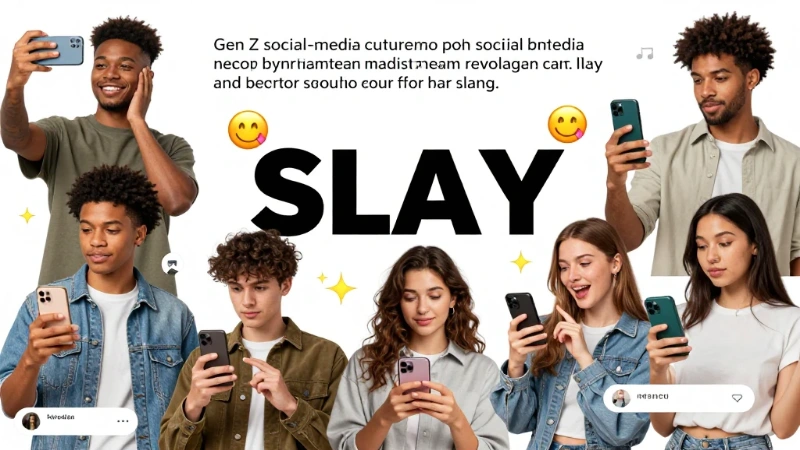
Gen Z adopted “slay” because it’s short, expressive, and instantly communicates enthusiastic approval. A few reasons it caught on so widely:
- It’s efficient. One syllable replaces a whole sentence of praise.
- It has roots in ballroom and queer culture, where “slay” described a killer performance or look at balls and drag competitions communities that have long shaped mainstream slang.
- Social media accelerated it. Platforms like Vine, then TikTok and Instagram, turned “slay” into a caption staple for outfit reveals, dance videos, makeup transformations, and confident moments.
- Musicians and influencers normalized it, using the word in captions, lyrics, and comment sections until it became second nature for younger internet users.
It’s less about age and more about internet fluency; plenty of millennials and even older users say it too, especially in fashion, beauty, and pop culture spaces.
What Is a Slay Girl?
A “slay girl” (sometimes “slay queen”) is a term for a woman who consistently presents herself with confidence, polished style, striking makeup, and an assertive social media presence. It’s often used admiringly, describing someone who “has her life together” visually and socially.
However, the term can carry different tones depending on the region and context:
- In many English-speaking online spaces, it’s a compliment describing a confident, well-dressed woman.
- In parts of West and East Africa, particularly Nigeria, Kenya, and Uganda, “slay queen” has picked up a more mixed or even critical connotation, sometimes implying a woman who prioritizes appearance and status over substance, or who is seen as materialistic.
Because the meaning shifts by community, it’s worth reading the tone of whoever is using it before assuming it’s purely a compliment.
Slay Queen Meaning
“Slay queen” builds on the same core idea as “slay girl” but leans harder into the “queen” framing: someone who commands a room the way royalty would. It’s commonly used to praise:
- A standout outfit or glam look
- Confident body language or a “boss” attitude
- Someone dominating a competitive or creative moment (a performance, a game, a project)
As noted above, in some African online communities the phrase has also been used more critically to describe someone perceived as chasing a luxurious image, sometimes unsustainably. Both meanings exist side by side, so it’s a context-dependent term rather than a universally positive or negative one.
Is Slay Good or Bad?
“Slay” is overwhelmingly a positive word. It’s used to celebrate, hype up, and encourage. Telling someone “you slayed” is meant to make them feel seen and appreciated.
That said, tone matters:
- Genuine praise: “You slayed that speech!” Sincere compliment.
- Sarcastic or ironic use: Sometimes people use “slay” jokingly or sarcastically about something mediocre, similar to saying “wow, groundbreaking” with a raised eyebrow. Context and delivery (tone of voice, emojis, punctuation) usually make this clear.
Outside of the rare sarcastic use, “slay” is not an insult, and it’s not considered rude in casual conversation.
Is “Slay” a Rude Word?
No. “Slay” is not profanity, and it is not offensive on its own. It’s casual slang, appropriate for texting, social media captions, and everyday conversation among friends.
The only situations where it might feel out of place:
- Formal writing (essays, business emails, reports) it reads as too casual.
- Professional conversations with people who aren’t familiar with internet slang, where it might just cause confusion rather than offense.
It won’t get flagged as inappropriate by content moderators or considered impolite in social settings; it’s simply informal.
Is “Slay” a Black Word?
“Slay” as a compliment for looking or performing exceptionally has roots in African American Vernacular English (AAVE) and in Black and Latino ballroom/drag culture of the 1980s and 1990s, where performers would be praised for “slaying” a category at a ball.
From there, it moved into wider Black cultural expression in music, fashion commentary, and everyday speech before crossing into mainstream youth slang through social media in the 2010s.
Like many widely used slang terms, “slay” now gets used across many communities and demographics. It’s worth acknowledging its origin, since understanding where slang comes from is part of using it respectfully and accurately, rather than treating its history as unknown or incidental.
What Does “Slay Baddie” Mean?
“Baddie” is separate slang describing someone (usually a woman) with a bold, glamorous, done-up aesthetic think sharp makeup, curated outfits, and confident posing- often associated with a specific Instagram/TikTok beauty style.
“Slay baddie” combines the two words to praise someone who is executing that baddie aesthetic flawlessly. It’s typically used as a caption or comment under a photo, meaning something like: “You’re serving that confident, glam look perfectly.”
How to Be Slay?
“Being slay” isn’t about following a strict formula; it’s about confidence and intentional presentation. People generally associate it with:
- Owning your look. Whether it’s a bold outfit or a simple one, wearing it with confidence is central to “slaying.”
- Nailing the moment. Doing well in whatever you’re doing a performance, an interview, a photo with visible self-assurance.
- Positive energy. “Slay” culture rewards enthusiasm and self-expression rather than perfection.
- Attention to detail. Especially online, a “slay” look often involves put-together styling, from hair to accessories.
There’s no single checklist; the common thread is confidence paired with visible effort or skill.
How Do You Pronounce Slay?
“Slay” is pronounced /sleɪ/, rhyming with “day,” “play,” or “way.” It’s a single syllable: SLAY.
In casual or excited speech, people often draw it out for emphasis, like “slayyyy,” but the base pronunciation stays the same o: a one-syllable word.
What Does Slay Mean From a Girl?
When a girl says “slay” to someone, whether a friend, a stranger’s post, or even herself, it almost always functions as a compliment about appearance, confidence, or performance. It doesn’t imply romantic or flirtatious interest by default; it’s closer to saying “you look amazing” or “you did great.”
If a girl says “slay” specifically about something you did (an outfit, an achievement, a joke), take it at face value: she’s impressed and wants you to know it.
What Does Slay Mean on TikTok?
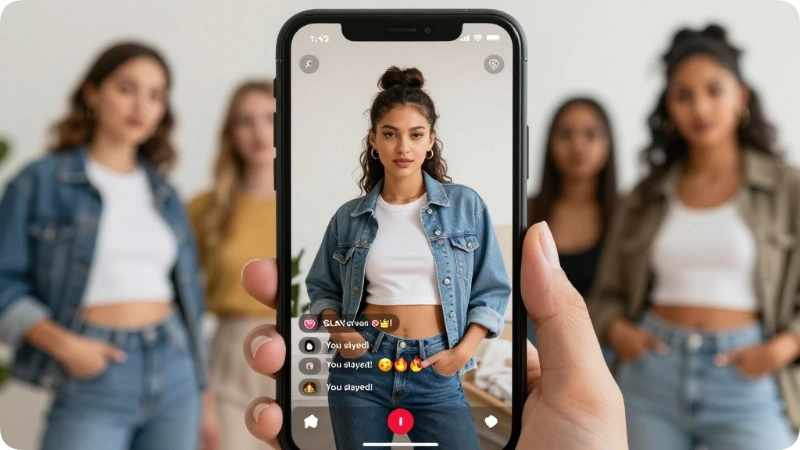
On TikTok, “slay” shows up constantly in comments and captions under:
- Outfit-of-the-day and “get ready with me” videos
- Dance and lip-sync performances
- Makeup transformations
- Confident or funny moments creators post about themselves
It functions as quick, high-energy approval a way for viewers to hype up a creator without writing a full sentence. TikTok’s fast comment culture made “slay” one of the platform’s most common one-word reactions.
What Does Slay Mean in Chat?
In texting or DMs, “slay” is used the same way as in comments as a short compliment. Common examples:
- “Just got the job!” → “SLAY 👑”
- Someone sends a mirror selfie → “slay fr”
- A friend describes handling an awkward situation smoothly → “okay slay”
It’s a quick way to show enthusiastic support without needing a longer reply.
What Does Slay Mean Gen Z?
For Gen Z specifically, “slay” is one of many short, high-energy slang terms (alongside words like “bet,” “no cap,” and “iconic”) used to express approval quickly in a culture built around fast-scrolling social feeds. It’s not exclusive to Gen Z, but this generation is largely responsible for popularizing it at scale through platforms like TikTok, Twitter/X, and Instagram.
Slay Meaning on Instagram
On Instagram, “slay” appears mostly in comments on photos and Reels under a well-styled outfit post, a glam selfie, a fitness transformation, or a confident caption. It’s often shortened further or stylized (“slayyy,” “SLAYED,” “slay queen 👑”) and paired with fire or crown emojis to intensify the compliment.
What Does Slay Mean in the Bible?
In Biblical translations, “slay” is used in its original, literal sense, meaning “to kill,” typically in reference to warfare, sacrifice, or judgment (for example, older translations describing armies being “slain” in battle). This is the traditional English meaning of the word, predating the modern slang usage by centuries.
The Biblical use of “slay” has no connection to the modern compliment-based slang meaning; they are simply two different meanings of the same Old English word, separated by hundreds of years of language change.
Similar Slang Terms: How Gen Z Talks
“Slay” is part of a bigger vocabulary of expressive Gen Z slang. Here’s how some related terms compare:
| Term | Meaning | Example |
| Slay | Doing something impressively well | “She slayed that exam” |
| Cringe | Something embarrassing or awkward to watch | “That joke was so cringe” |
| Sus | Suspicious or questionable | “Why are you being sus right now?” |
| Bruh | Expression of disbelief, frustration, or casual address | “Bruh, I can’t believe that happened” |
| Iconic | Memorable, legendary, in a good way | “That outfit is iconic” |
| No cap | “No lie” / “for real” | “That movie was amazing, no cap” |
How Does Gen Z Say Cringe?
Gen Z uses “cringe” (often just “cringe” as a standalone reaction, or “so cringe”) to describe something secondhand-embarrassing: an awkward joke, an outdated trend, or an overly try-hard moment. It’s the near-opposite energy of “slay”: where slay celebrates confidence done right, cringe mocks confidence done wrong.
Why Does Gen Z Say Bruh?
“Bruh” started as a casual variation of “bro” or “brother,” used to address a friend. It evolved into a general reaction word expressing disbelief, annoyance, or amusement, similar to saying “come on” or “seriously?” It’s used regardless of who’s being spoken to.
Can I Call Bruh to a Girl?
Yes. “Bruh” has largely become gender-neutral in casual slang. It’s commonly used as a reaction or address to friends of any gender, not just guys, much like “dude” is used across genders in casual American English.
How Does Gen Z Say I Love You?
Gen Z often softens or stylizes “I love you” with slang like “ily,” “luv u,” or affectionate but casual phrases like “you’re everything” or “I’m obsessed with you” (used platonically as well as romantically). Tone and platform (texting vs. in person) shape which version gets used.
What Is Sus and Cringe?
“Sus” (short for “suspicious,” popularized further by the game Among Us) describes behavior that seems shady or questionable. “Cringe” describes behavior that’s embarrassing to witness. They’re often used together to critique someone’s actions: us” questions their honesty, “cringe” questions their social judgment.
How Does Gen Z Say Sorry?
Casual apologies among Gen Z often show up as “my bad,” “oops sorry,” or simply an apologetic emoji, reflecting a generally more informal, low-stakes tone in everyday texting compared to formal apologies.
Do Gen Z Say SUS?
Yes, “sus” remains common in casual conversation and gaming culture, especially to call out behavior that seems off or dishonest.
How Did Gen Z Say “Cool”?
Common Gen Z equivalents of “cool” include “fire,” “iconic,” “slay,” “bet,” and “valid,” each with slightly different shades of meaning, from general approval (“fire,” “iconic”) to agreement (“bet”) to validating someone’s choice or feeling (“valid”).
Common Misunderstandings About “Slay”
- Mistake: Assuming “slay” always refers to physical appearance. In reality, it’s used for achievements, performances, and confidence too, not just looks.
- Mistake: Thinking it’s a new word. “Slay” as a compliment has circulated in ballroom and Black culture for decades before going mainstream online.
- Mistake: Reading it as aggressive because of its literal “kill” meaning. In slang, the violent meaning is completely dropped.
- Mistake: Assuming it’s exclusive to teenagers. Millennials, especially in fashion and entertainment spaces, use it regularly too.
When to Use and Avoid “Slay”
Good times to use it:
- Texting friends or commenting on social media
- Casual conversation, especially about style, performance, or confidence
- Light, celebratory contexts (achievements, transformations, wins)
Better to avoid it:
- Formal writing, resumes, or business communication
- Conversations with people unfamiliar with internet slang, where it may just confuse rather than land as a compliment
- Somber contexts, where casual slang feels tonally mismatched
FAQs
Do the Kids Still Say “Slay”?
Yes, “slay” remains in active use across social media and casual conversation as of 2026, though slang trends shift quickly and some newer terms circulate alongside it. It hasn’t disappeared, but like most slang, its popularity will likely evolve.
Do People Still Say “Slay” in 2026?
Yes. While internet slang trends cycle in and out of heavy use, “slay” has stayed common in comments, captions, and everyday texting well beyond its initial viral peak, partly because it’s short, flexible, and easy to use in almost any celebratory context.
Is Slay a Bad Word, Yes or No?
No. “Slay” is not profanity or an insult. It’s informal slang, appropriate for casual settings but not considered offensive or inappropriate.
Who Is Slay?
“Slay” isn’t a person; it’s a slang word. If you’ve seen “Slay” used as a nickname, username, or character name somewhere, that’s a separate, specific reference unrelated to the general slang meaning covered here.
Who First Said, “Slay”?
There’s no single documented “first” person credited with coining the slang use of “slay.” Its complementary meaning developed gradually within Black American and ballroom/drag culture through the 20th century before spreading more broadly through music, fashion media, and eventually social media.
What Does “Slay” Mean in Girl Code?
In casual “girl code” usage, “slay” functions as encouragement and solidarity, hyping up a friend’s look, decision, or achievement. It’s less a formal “code” rule and more a shorthand for supportive enthusiasm between friends.
Can I Say “Slay” to a Girl?
Yes. “Slay” is commonly said to and by people of any gender. Saying it to a girl about her outfit, achievement, or confidence is a normal, friendly compliment.
Can You Say “Slay” to a Guy?
Yes. While “slay” is often associated with fashion and beauty content typically featuring women, it’s used across genders. Telling a guy “you slayed that game” or “that fit is slay” is completely normal.
Is Slay Girl a Compliment?
Generally, yes. ” Slaygirl” praises confidence and style. As noted earlier, in some regional contexts (particularly parts of Africa) “slay queen” can carry a more critical undertone, so it’s worth reading the surrounding conversation for tone.
How to Reply to “Slay Girl”?
A simple, friendly reply works best: “thank youuu,” a heart or crown emoji, or bouncing the compliment back with “you’re the one slaying.” There’s no formal etiquette; casual, warm responses fit the tone.
How to Reply to “Slayed”?
Similar to replying to any compliment: a thank-you, an emoji, or returning the energy (“we slayed together” or “thank you, I tried”). Keep it casual and match the enthusiasm of the original message.
How to Reply to “Wassup Girl”?
This is a casual greeting, not really tied to “slay” specifically. A simple “not much, you?” or “just chilling, what’s good with you”? fits naturally.
What Does Girls Like to Slay Mean?
This phrase usually just means the things girls enjoy excelling at or presenting confidently: style, creative projects, performances, or personal goals. It’s a loose, informal phrase rather than a fixed expression with one strict meaning.
Quick Summary
“Slay” is modern slang for succeeding impressively, looking great, or handling something with confidence. It comes from Black American and ballroom culture, spread through hip-hop and fashion, and went mainstream via social media. It’s overwhelmingly positive, gender-neutral, not offensive, and still widely used today, though kept to casual conversation rather than formal writing.
Conclusion
“Slay” has evolved far beyond its traditional meaning of “to kill.” In modern slang, it is a positive way to praise someone for looking amazing, performing well, or handling a situation with confidence. Its roots in Black American, ballroom, and drag culture helped shape the meaning that later spread through music, fashion, and social media.
Today, you may see “slay” in TikTok comments, Instagram captions, text messages, and everyday conversations. Whether someone says “you slayed,” “slay queen,” or simply “SLAY,” the intended message is usually encouragement and enthusiastic approval. The meaning can change slightly by context, so understanding how and where it is used helps you respond naturally.
In short, slay means to do something exceptionally well, look great, or show confidence. It is casual slang, not profanity, and works best in relaxed conversations rather than formal writing.

I am JohnsonMili, a passionate Prayer Writer and Spiritual Content Researcher dedicated to illuminating the paths of those seeking solace and inspiration.Through my platform, PrayersInfo.com, I share powerful prayers and uplifting faith content designed to foster a deeper connection with God.My mission is to guide readers toward peace and hope, empowering them to navigate life’s challenges with spiritual resilience.Join me on this transformative journey as we explore the profound impact of prayer and faith together.