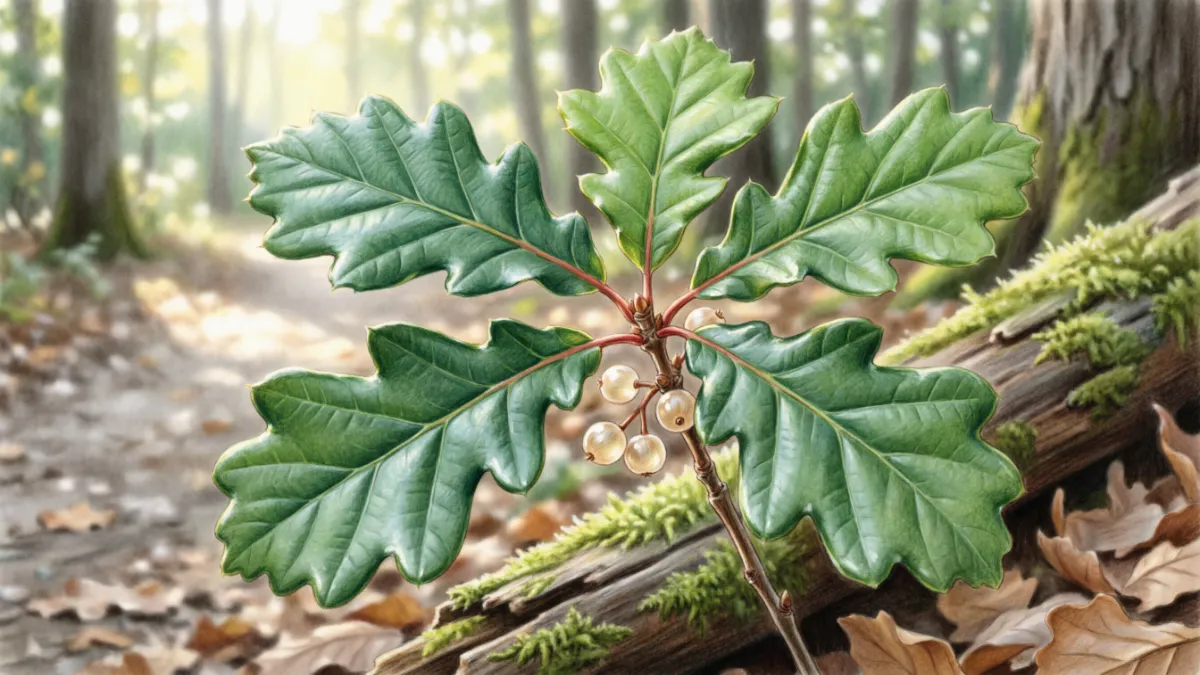
Poison oak has clusters of three shiny, lobed leaflets that resemble oak leaves, along with greenish-white berries and reddish stems that turn bright red or orange in fall. Learning these features, plus how they differ from poison ivy and poison sumac, is the single best way to avoid the itchy, blistering rash the plant is famous for.
If you’re trying to identify a plant on a hiking trail, figure out why you’re suddenly itchy, or work out if a rash on your skin matches poison oak, this guide covers everything from plant identification to rash symptoms, treatment, and common myths.
Quick Answer:
Poison oak grows as a low shrub or climbing vine with leaves arranged in groups of three, each leaflet shaped like a small, rounded oak leaf with a glossy or slightly fuzzy texture. Leaf color shifts from light green in spring to dark green in summer and red, orange, or yellow in fall. The plant produces small greenish flowers and clusters of pale, waxy berries. Remember the old warning “leaves of three, let it be”; it applies to poison oak just as it does to poison ivy.
What Does Poison Oak Look Like?
Poison oak belongs to the same plant family as poison ivy and poison sumac, and all three contain an oily resin called urushiol that triggers an allergic skin reaction in most people. Poison oak itself grows in two main forms depending on the region: Atlantic poison oak, found mostly in the southeastern United States, and Pacific poison oak, common along the West Coast.
Key identifying features include:
- Leaf grouping: Almost always three leaflets per stem, occasionally five.
- Leaf shape: Rounded, scalloped edges that resemble a real oak leaf, unlike the more pointed leaflets of poison ivy.
- Texture: Leaves often look glossy or slightly hairy, especially on the underside.
- Growth pattern: Can grow as a low shrub, a dense thicket, or a climbing vine that wraps around trees and fences.
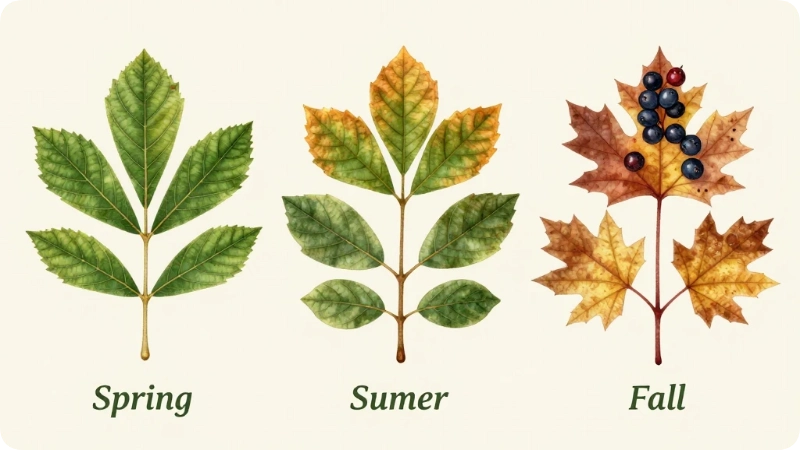
- Color changes: Bright green in spring, deep green in summer, and vivid red, orange, or yellow in autumn.
- Berries: Small, greenish-white, waxy-looking berries that grow in loose clusters, usually appearing in late summer.
Because the plant changes color and shape throughout the seasons, many people don’t recognize it until after they’ve already brushed against it.
What Does Poison Oak Rash Look Like?
A poison oak rash typically appears as red, raised streaks or patches on the skin, often in a line where the plant brushed against you. Within 12 to 48 hours, the area usually develops small, fluid-filled blisters surrounded by inflamed, swollen skin.
Common rash characteristics:
- Intense itching that often starts before any visible marks appear
- Red, inflamed skin in streaks, patches, or blotches
- Small blisters that may merge into larger ones and ooze clear fluid when scratched
- Swelling, especially on the face, eyelids, or genitals, where skin is thinner
- Rash appearing in a linear or streaky pattern that follows where the plant touched the skin
The rash generally shows up within one to three days of contact, though a first-time exposure can take up to two weeks to develop a visible reaction.
What Does Poison Oak Look Like on Human Skin?
On the skin, poison oak’s effects look like an allergic contact dermatitis rather than an infection. Expect reddened, textured skin with raised bumps or blisters clustered in the exact shape of the contact, often a scratch-like line, a handprint pattern, or a patch where clothing brushed against the plant’s oil.
The color of the rash tends to range from pink to deep red, and in people with darker skin tones, it may appear more brown, purple, or grayish rather than bright red. Blisters can weep clear fluid, and the surrounding skin often feels warm, tight, or swollen.
What Does Poison Oak Look Like on Your Legs?
On the legs, poison oak rash commonly shows up as vertical streaks or scattered patches, since legs are the body part most likely to brush directly against low-growing plants on a trail. Look for:
- Thin, linear red marks running along the shin or calf, matching where a leaf or vine dragged across the skin
- Clustered blisters behind the knee or on the inner thigh, areas where skin folds trap the oil longer
- Patches that worsen over 24 to 72 hours before beginning to dry out and crust over
Because urushiol can transfer from your hands to other parts of your legs while you scratch or adjust your clothing, new patches can keep appearing for several days even without additional plant contact.
What Are the Symptoms of Poison Oak on the Face?
Facial poison oak rash tends to look more dramatic than rashes elsewhere because facial skin, especially around the eyes and lips, is thin and reacts strongly to inflammation. Typical symptoms include:
- Puffy, swollen eyelids that can temporarily make the eyes look nearly shut
- Redness and blistering along the cheeks, forehead, or jawline
- Tightness or a burning sensation, especially if oil was transferred from unwashed hands
- Swelling that can extend to the neck in more severe reactions
Facial swelling that affects breathing, vision, or swallowing is a medical emergency and needs urgent care rather than home treatment.
Poison Oak on Private Parts
Poison oak rash can appear on the genitals or groin if urushiol oil is transferred there by unwashed hands, clothing, or a pet that walked through the plant. This area has thin, sensitive skin, so the reaction often looks more swollen and feels more intense than rashes on the arms or legs, even though the plant itself never touched that spot directly.
A few practical points worth knowing:
- The rash is not contagious and is not a sexually transmitted infection; it’s a contact allergy to plant oil.
- Swelling in this area can look alarming but usually follows the same timeline as poison oak elsewhere, peaking within a few days and fading over one to three weeks.
- A cool compress, loose clothing, and over-the-counter hydrocortisone can ease discomfort, but a doctor should be consulted for severe swelling, pain with urination, or signs of infection such as pus or fever.
What Is Poison Oak in a Woman?
Poison oak reactions work the same way in women as in men; there’s no biological difference in how the rash develops. The confusion around this phrase usually comes from cases where women notice a rash in sensitive areas after unknowingly transferring urushiol oil from their hands, clothing, or a pet. As with any case, the cause is skin contact with the plant’s oil, not gender-specific biology.
Is Poison Oak an STD?
No, poison oak is not a sexually transmitted disease. It’s an allergic skin reaction caused by direct or indirect contact with urushiol oil from the plant. The confusion sometimes arises because the rash can appear in the genital area, but the cause is entirely unrelated to sexual contact; it comes from oil on hands, clothing, towels, or pets that has touched the skin there.
How Do Humans Get Poison Oak?
People develop a poison oak reaction after their skin comes into contact with urushiol, the oily resin found in the plant’s leaves, stems, roots, and even dead plant material. Common ways people get it include brushing against the leaves, stems, or berries while hiking, gardening, or clearing brush.
- Directcontact: brushingg against the leaves, stems, or berries while hiking, gardening, or clearing brush.
- Indirect contact: touching clothing, shoes, gardening tools, or sports equipment that carried the oil.
- Pet transfer: petting a dog or cat that walked through poison oak, since the oil clings to fur without affecting the animal.
- Smoke exposure: inhaling smoke from burning poison oak plants, which can cause a reaction inside the airways and lungs.
Urushiol can stay active on surfaces for months to years if it isn’t washed off, which is why old gardening gloves or camping gear can cause a surprise rash long after the original hike.
How Do I Tell If I Touched Poison Oak?
If you’ve been outdoors and later develop itching or a streaky red rash, you likely touched poison oak, even if you don’t remember contact with the plant itself. Signs that point to poison oak exposure include:
- Itching that starts before any visible rash appears
- Red streaks or patches in a pattern that matches brushing against a plant, sleeve, or leash
- New skin symptoms appearing 12 hours to several days after being outdoors
- A rash that worsens over the first two to three days before improving
If you suspect exposure but haven’t developed symptoms yet, washing the area with soap and cool water within 30 minutes can significantly reduce or prevent a reaction.
Does Touching Poison Oak Rash Spread It?
Touching or scratching the rash itself does not spread the reaction to new areas, because the blister fluid does not contain urushiol. What actually spreads the rash is leftover oil still on your skin, fingernails, or clothing being transferred to new spots, which can make it look like scratching caused the rash to spread, even though the real cause is unwashed oil.
Once the skin, nails, and clothing are fully washed, the rash cannot spread to other people or other parts of your body.
Does Showering Stop the Spread of Poison Ivy?
Yes, washing promptly with soap and lukewarm water is one of the most effective ways to stop poison ivy or poison oak from spreading, but timing matters. Washing off urushiol within 20 to 30 minutes of contact can prevent or greatly reduce a reaction. Washing several hours later still helps remove oil from skin and reduces the risk of spreading it to new areas, even though it won’t undo a reaction that has already started.
Tips for an effective wash:
- Use lukewarm, not hot, water h; hot water can open pores and worsen absorption
- Wash all exposed skin, under fingernails, and hair
- Wash clothing, shoes, and gear separately in hot water
- Avoid sharing towels until everything has been washed
Should I Shower If I Have Poison Oak on Me?
Yes, showering is recommended even after a rash has already started. It won’t reverse blisters that have formed, but it removes any remaining oil so the rash doesn’t keep spreading to untouched skin. Use a mild soap, pat the skin dry instead of rubbing, and avoid scrubbing blistered areas too hard.
What Soap Removes Poison Oak Oil?
Most soaps can remove urushiol if used promptly, but a few options are especially effective because they’re designed to break down oils rather than just water-soluble dirt:
| Product Type | How It Helps |
| Dish soap | Cuts through oily residue effectively on skin and clothing |
| Specialty urushiol-removal wash | Formulated specifically to bind and lift plant oils |
| Rubbing alcohol wipes | Breaks down oil quickly when soap and water aren’t available |
| Regular bar or liquid soap | Works well if used within the first 30–60 minutes after contact |
Regardless of the product, the technique matters more than the brand: use plenty of water, work up a lather, and rinse thoroughly rather than wiping the oil around.
Can Poison Oak Spread on Sheets?
Yes, if urushiol oil is still present on skin, clothing, or hair, it can transfer onto bedsheets, towels, and furniture, and from there onto someone else’s skin. The oil itself doesn’t multiply or “spread” on fabric, but it can sit there for a long time and cause a new reaction whenever it touches skin again. Washing sheets, towels, and clothing in hot water with regular detergent breaks down the oil and removes this risk.
Can I Sleep in the Same Bed as Someone With Poison Ivy?
Yes, as long as the person has thoroughly washed off any remaining oil, the rash itself is not contagious and cannot pass from one person to another, even through blister fluid. The only real risk is if urushiol oil is still present on their skin, hair, or clothing and transfers onto shared sheets, so a shower before bed largely eliminates the concern.
What Kills Poison Oak? Best Poison Oak Killer Options
Removing poison oak from a yard or property usually requires a combination of physical removal and, in stubborn cases, herbicide. Common approaches include:
- Manual removal: Wearing thick gloves, long sleeves, and eye protection, then pulling or digging out roots is effective for small patches but requires careful disposal.
- Herbicides containing glyphosate or triclopyr: Applied directly to leaves, these are commonly used for larger infestations and are often most effective when applied in late spring or summer while the plant is actively growing.
- Smothering: Covering an area with heavy tarp or cardboard over several months to cut off sunlight, useful for small patches where chemicals aren’t wanted.
- Repeated cutting: Regularly cutting new growth back weakens the root system over time, though it rarely eliminates an established plant in one season.
Never burn poison oak, since the smoke carries urushiol particles that can cause severe reactions in the eyes, skin, and lungs.
What Is the Natural Enemy of Poison Ivy?
Poison ivy and poison oak have few natural predators, since most animals aren’t affected by urushiol. That said, a handful of species interact with the plant in ways that can help control its spread:
- Goats are commonly used for controlled grazing because they eat poison ivy and poison oak without any skin reaction.
- Birds eat the berries and help disperse seeds, which is more of a spreading factor than a control method.
- Certain fungi and insects occasionally damage leaves, but none reliably control the plant’s growth the way grazing animals can.
Because so few natural checks exist, manual removal or herbicide remains the most reliable long-term control method for homeowners.
What Does Toothpaste Do to Poison Ivy? Will It Dry Out the Rash?
Toothpaste is a popular home remedy myth, but it isn’t recommended for poison ivy or poison oak rash. While some people believe the menthol or drying agents in toothpaste soothe itching, dermatologists generally advise against it because:
- Many toothpaste formulas contain fragrances, whitening agents, or menthol that can irritate already-inflamed skin
- It offers no proven benefit over calamine lotion, hydrocortisone cream, or oatmeal baths
- It can trap heat and moisture against blisters, potentially slowing healing or increasing irritation
Sticking to products actually designed for contact dermatitis, like calamine lotion, over-the-counter hydrocortisone, or antihistamines for itching, is a more reliable approach than toothpaste.
How Long Does Poison Oak Last? How Long Will the Rash Last?
A typical poison oak rash lasts one to three weeks, depending on the severity of the reaction and how much urushiol contacted the skin. General timeline:
- Days 1–3: Redness, itching, and blister formation begin and often worsen.
- Days 4–7: Blisters may peak, ooze, and start to crust over.
- Week 2: Itching gradually decreases as the skin begins healing.
- Week 2–3: Rash fades completely in most mild-to-moderate cases.
Severe reactions, large surface area exposure, or repeated re-exposure to contaminated clothing can extend healing time beyond three weeks. A rash that isn’t improving after three weeks, or that shows signs of infection such as increasing pain, pus, or fever, should be evaluated by a doctor.
What Is the Quickest Way to Get Rid of Poison Oak Rash?

There’s no instant cure, since the reaction has to run its natural course, but these steps can speed relief and shorten discomfort:
- Wash immediately with soap and cool water to remove any remaining oil
- Apply cool compresses several times a day to reduce itching and swelling
- Use over-the-counter hydrocortisone cream or calamine lotion to calm inflammation
- Take an oral antihistamine to reduce itching, especially at night
- Try an oatmeal bath to soothe widespread irritation
- Avoid scratching, which can break the skin and lead to infection
- See a doctor for prescription steroids if the rash is severe, widespread, or on the face or genitals
For most people, following these steps consistently from day one leads to noticeably faster relief within 48 to 72 hours, even though full healing still takes one to three weeks.
What Can Be Mistaken for Poison Oak?
Several plants and skin conditions are commonly confused with poison oak, which can lead to unnecessary worry or missed treatment. Frequently mistaken look-alikes include:
- Virginia creeper a climbing vine with five leaflets instead of three, harmless to most people but sometimes causes mild irritation
- Boston ivy similar climbing habit and lobed leaves, but not related to poison ivy or oak
- Box elder young box elder seedlings can have three-leaflet growth that resembles poison ivy from a distance
- Blackberry or raspberry brambles thorny stems that can cause scratches mistaken for allergic rash
- Eczema or contact dermatitis from other allergens, such as reactions to certain soaps, plants, or fabrics that mimic the streaky rash pattern
When in doubt, the “leaves of three” rule combined with checking for the oak-like leaf shape and reddish stem color is the most reliable quick check.
What Rash Looks Like Chicken Pox but Isn’t?
Several rashes are commonly mistaken for chicken pox because they involve small, itchy, fluid-filled bumps. The most frequently confused conditions include:
- Poison ivy or poison oak rash, which can look like a cluster of chicken pox blisters but follows a streaky, contact-based pattern rather than spreading randomly over the whole body
- Hand, foot, and mouth disease, common in young children, which causes small blisters on the hands, feet, and mouth
- Shingles, which causes a painful, blistering rash typically confined to one side of the body along a nerve pathway
- Insect bite reactions, especially from bed bugs or fleas, which can cause multiple small itchy bumps in clusters
Unlike chicken pox, which usually comes with fever and spreads across the whole body in waves, poison oak rash tends to follow a linear or patchy pattern limited to areas of plant contact.
What Is This Rash on My Leg? How to Tell If It’s Poison Oak
If you’re trying to identify an unfamiliar rash, a few questions can help narrow it down:
- Does it follow a line or streak pattern? This points toward plant contact rather than an internal allergy or infection.
- Did it appear 1–3 days after being outdoors? This timing matches typical poison oak or poison ivy exposure.
- Is it intensely itchy with small blisters? This is a hallmark of urushiol-triggered contact dermatitis.
- Is there fever, spreading rash all over the body, or pus? These point away from poison oak and suggest another condition, like an infection, that needs medical evaluation.
If symptoms are severe, cover a large portion of the body, or involve the face, eyes, or genitals, seeing a doctor is the safest next step rather than guessing based on appearance alone.
What Does Poison Ivy Look Like?
Poison ivy shares the same three-leaflet pattern as poison oak but tends to have leaflets that are more pointed and less deeply lobed, with a smoother, glossier surface. It grows as a low shrub, a groundcover, or a climbing vine with small aerial roots that help it cling to tree trunks, en described as looking like a “hairy” rope when climbing. Leaves shift from reddish in spring, to green in summer, to red, orange, or yellow in fall, and the plant produces small white or pale yellow berries.
What Does a Poison Ivy Rash Look Like?
A poison ivy rash looks very similar to a poison oak rash because both come from the same urushiol compound. Expect red, itchy streaks or patches, followed by small blisters that can merge and ooze clear fluid. The rash commonly appears in a linear pattern that traces exactly where the plant brushed against the skin, and it typically peaks in severity within the first three to five days before gradually fading.
What Does Poison Sumac Look Like?
Poison sumac is a woody shrub or small tree, distinct from poison oak and poison ivy because its leaves grow in clusters of seven to thirteen leaflets rather than three. Each leaflet is smooth-edged, elongated, and arranged in pairs along a reddish stem, with a single leaflet at the tip. It typically grows in wet, swampy areas such as bogs and flooded woodlands, unlike poison oak and poison ivy, which prefer drier ground. In fall, its leaves turn a striking orange-red, and it produces clusters of pale, drooping berries.
What Does Poison Sumac Rash Look Like?
Poison sumac rash is considered one of the more severe urushiol reactions, often producing more intense redness, swelling, and blistering than poison oak or poison ivy. Symptoms typically include:
- Streaky red patches that can quickly develop into large, fluid-filled blisters
- Significant swelling, especially if the rash appears on the face or hands
- Intense itching and burning that can last two to three weeks
- Oozing and crusting as blisters break down over the first week
Because poison sumac exposure is often more concentrated (from broken stems or damaged leaves), reactions can be more widespread than typical poison oak contact.
Poison Ivy vs. Poison Oak Rash: Pictures and Key Differences
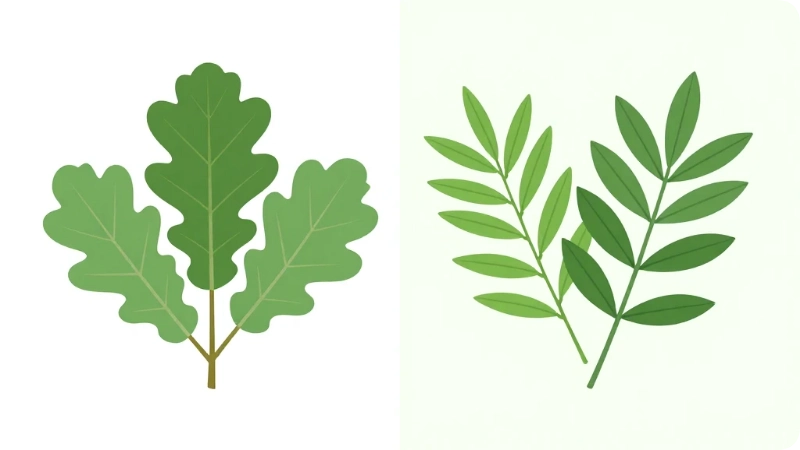
Since both rashes come from the same urushiol oil, they look nearly identical on skin; the real differences lie in the plants themselves and, sometimes, subtle rash patterns based on how contact occurred.
| Feature | Poison Oak | Poison Ivy |
| Leaflet shape | Rounded, oak-like, lobed edges | Pointed, smoother edges |
| Leaflet count | Usually 3, occasionally 5 | Almost always 3 |
| Growth habit | Shrub or climbing vine | Shrub, groundcover, or climbing vine with aerial roots |
| Common region | Western and southeastern U.S. | Widespread across the U.S. and Canada |
| Berry color | Greenish-white | White to pale yellow |
| Rash appearance | Red streaks, blisters, intense itching | Red streaks, blisters, intense itching |
| Rash severity | Similar; varies by individual sensitivity | Similar; varies by individual sensitivity |
Because the rash itself doesn’t reliably tell you which plant caused it, identifying the plant at the source is far more useful than trying to diagnose the culprit from the skin reaction alone.
What Is Poison Oak in Grey’s Anatomy?
In the medical drama Grey’s Anatomy, poison oak became the center of a memorable, comedic storyline for the character Dr. Addison Montgomery. In the Season 2 episode “What Have I Done to Deserve This?,” Addison develops a poison oak rash after walking a dog through the woods while living in ex-husband Derek Shepherd’s trailer. The rash ends up in an unusually sensitive location, leading to an awkward exam and a running joke about the situation between Addison, Derek, and Dr. Miranda Bailey.
The storyline is played for laughs rather than medical realism, but it does capture one accurate detail: how easily urushiol oil can transfer indirectly, in this case from a dog’s fur, and end up somewhere the person never directly touched the plant.
How Did Addison Montgomery Get Poison Oak?
According to the show’s storyline, Addison contracted poison oak after walking a dog through wooded terrain while she and Derek were attempting to rebuild their relationship in his trailer. The plot doesn’t specify exact contact with the plant by Addison herself, reinforcing the idea accurate to reallife:t pets can carry urushiol on their fur and pass it to a person’s skin through petting or contact with fur-covered surfaces like bedding or a couch.
What Is the Most Skipped Episode of Grey’s Anatomy?
There’s no single official ranking of the most skipped Grey’s Anatomy episode, since this comes down to fan opinion rather than measured data. In fan discussions, two episodes are frequently mentioned as ones viewers tend to skip on rewatches: the Season 7 musical episode, often cited as divisive because of its singing format, and the Season 2 episode featuring the poison oak storyline, sometimes skipped due to an uncomfortable subplot involving other characters in the same episode. Opinions vary widely depending on which storylines or character arcs a given viewer prefers.
FAQs
Is poison oak dangerous if left untreated?
For most people, an untreated poison oak rash will heal on its own within one to three weeks. It becomes more concerning if the skin is scratched open and becomes infected, or if the reaction is severe enough to cause extensive swelling, especially near the eyes, mouth, or genitals. Such situations call for medical attention rather than waiting it out.
Can poison oak rash appear without touching the plant directly?
Yes. Urushiol oil can transfer from pets, clothing, garden tools, or camping gear that brushed against the plant, which means a rash can appear on skin that never touched a leaf or stem directly.
Does everyone react to poison oak the same way?
No. Sensitivity to urushiol varies significantly between individuals. Some people have mild or no visible reaction even after direct contact, while others develop severe blistering from very brief exposure. Sensitivity can also change over a person’s lifetime with repeated exposure.
Can poison oak rash come back without new exposure?
A true reaction won’t reappear without new contact with urushiol, but leftover oil hiding under fingernails, in shoes, or on unwashed gear can cause what looks like a “returning” rash days or even weeks later.
Is it safe to pop poison oak blisters?
No. Popping blisters increases the risk of infection and doesn’t speed up healing, since the fluid inside the blisters doesn’t contain urushiol or spread the rash. Leaving blisters intact and keeping the area clean is the safer approach.
How can I prevent poison oak rash when hiking?
Wearing long sleeves and pants, staying on cleared trails, learning to visually identify the plant, and washing skin and clothing promptly after any suspected contact are the most effective prevention strategies.
When should I see a doctor for poison oak?
See a doctor if the rash covers a large area of the body, affects the face or genitals with significant swelling, shows signs of infection such as pus or fever, or hasn’t started improving after two to three weeks.
Key Takeaway
Poison oak is identifiable by its clusters of three rounded, oak-shaped leaflets, seasonal color changes, and pale berries, while the rash it causes shows up as red, itchy, streaky patches that blister within a day or two of contact.
Knowing how to spot the plant, understanding how the oil spreads indirectly through pets and fabric, and reacting quickly with a thorough wash are the most effective ways to avoid or minimize a reaction.

I am JohnsonMili, a passionate Prayer Writer and Spiritual Content Researcher dedicated to illuminating the paths of those seeking solace and inspiration. Through my platform, PrayersInfo.com, I share powerful prayers and uplifting faith content designed to foster a deeper connection with God. My mission is to guide readers toward peace and hope, empowering them to navigate life’s challenges with spiritual resilience. Join me on this transformative journey as we explore the profound impact of prayer and faith together.