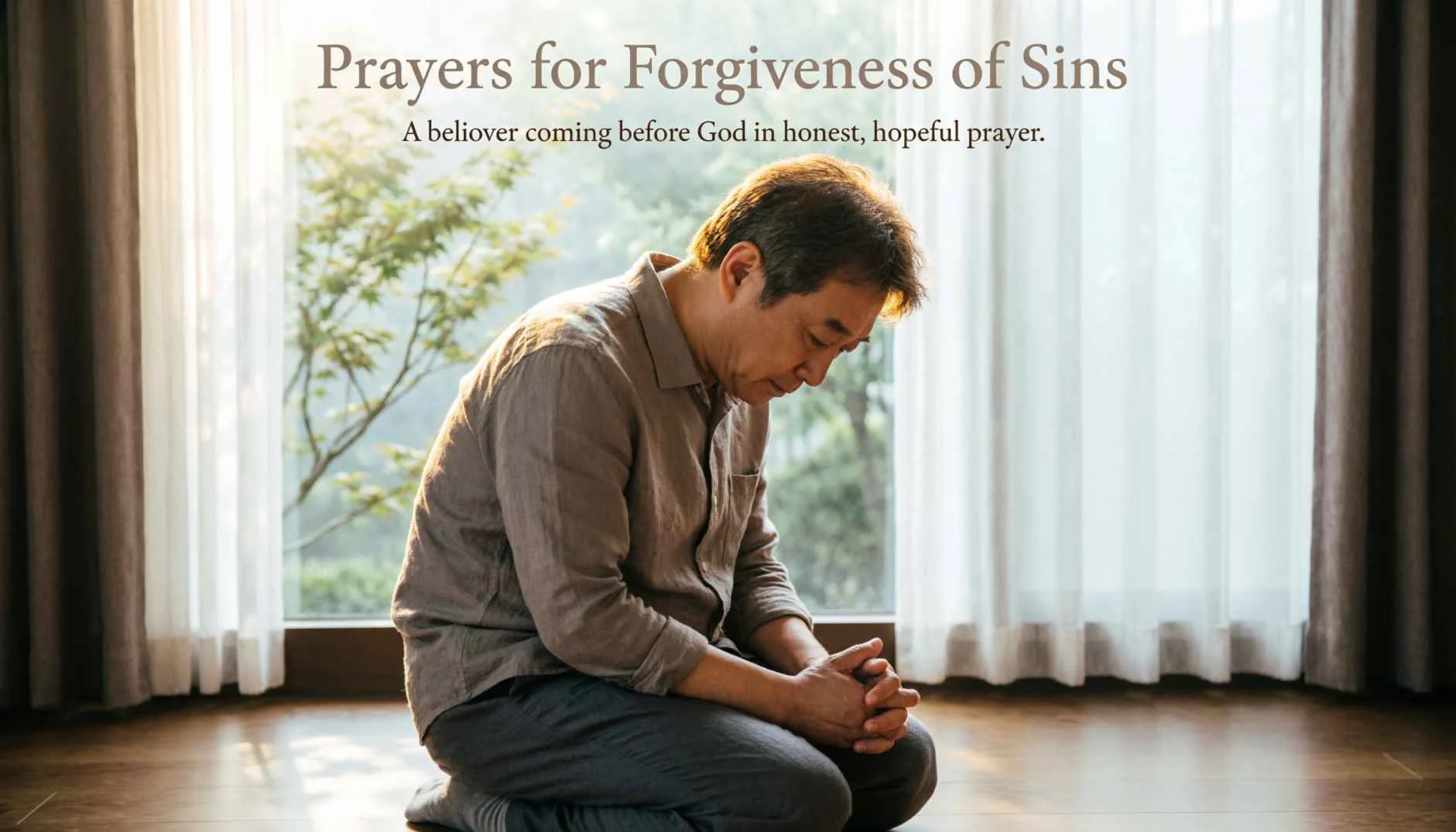
“If we confess our sins, he is faithful and just to forgive us our sins and to cleanse us from all unrighteousness.” 1 John 1:9
Every person who has ever lived has faced a moment when guilt sat heavy on their chest. Maybe it was something you said that you wish you could take back. Maybe it was a choice you made in private that you hoped no one would ever know about. Or maybe it was a pattern you have struggled with for years, and you are tired of feeling like you keep failing God.
If you have ever felt that weight, you are in the right place. This guide is for you the person who genuinely wants to come clean before God, experience His mercy, and walk forward with a lighter heart.
In This Guide
| Topic | What You Will Find |
| Meaning | What it means to ask God for forgiveness |
| Key Bible Verse | 1 John 1:9 |
| Benefits | Peace, restored relationship with God, emotional healing |
| How to Pray | Simple step by step guidance |
| Practical Steps | Daily habits for a life of repentance and renewal |
What Is a Prayer for Forgiveness of Sins?
A prayer for forgiveness of sins is a sincere, heartfelt conversation with God in which a person admits their wrongs, turns away from them, and asks for God’s mercy through the sacrifice of Jesus Christ. It is not a magic formula or religious ritual. It is an honest moment between a broken person and a perfect, loving Father.
Christians pray this way because the Bible is clear that all people sin and fall short of God’s standard (Romans 3:23). But the Bible is equally clear that God’s grace is greater than any sin we could commit. When we come to God with a repentant heart, He forgives fully, freely, and forever.
Key benefits of praying for forgiveness include releasing guilt and shame, restoring a close relationship with God, experiencing emotional and spiritual peace, finding freedom from destructive patterns, and gaining courage to start fresh.
The Biblical Foundation for Seeking God’s Forgiveness
Here’s a natural version under 300 words:
God’s Word is filled with clear promises about forgiveness. These are not uncertain hopes but trustworthy assurances from a God who always keeps His Word.
1 John 1:9 reminds us that when we confess our sins, God is faithful and just to forgive and cleanse us. Forgiveness is possible because of what Jesus accomplished on the cross.
Psalm 51:1–2 shows David crying out for mercy after a season of serious sin. His honest repentance teaches us that God welcomes broken hearts and offers cleansing to those who turn to Him.
Isaiah 1:18 paints a beautiful picture of grace. Though our sins are like scarlet, God can make them white as snow. His invitation is one of mercy, not rejection.
Micah 7:19 declares that God has compassion and casts our sins into the depths of the sea. He does not forgive while holding our failures over us.
Romans 8:1 offers lasting hope: “There is therefore now no condemnation for those who are in Christ Jesus.” Through Christ, guilt no longer has the final word.
Hebrews 4:16 encourages us to come confidently to God’s throne of grace. We do not need to make ourselves worthy first. Mercy and help are available whenever we need them.
No matter what you have done, God’s Word gives you every reason to come to Him. His forgiveness is real, His mercy is abundant, and His grace is greater than your sin.
Understanding What It Really Means to Seek Forgiveness
Many people think asking for forgiveness means repeating the right words until they feel better. But biblical forgiveness goes much deeper than that.
Repentance means turning around. The Greek word used in the New Testament is metanoia, which means a genuine change of mind and direction. It is not just feeling bad about sin it is making a decision to move away from it and toward God.
Confession means agreeing with God about what you have done. It is not about punishing yourself with words. It is simply being honest saying what God already knows, but choosing to face it openly rather than hide from it.
Receiving forgiveness means trusting that what God says in His Word is true for you personally. Many believers confess their sins but then continue to carry guilt as if God’s forgiveness was not quite enough. That is not humility that is unbelief in disguise. True faith says, “God promised to forgive, and I believe He has.”
The spiritual significance of this practice is enormous. Sin creates distance between us and God. Forgiveness closes that gap. When we seek God’s mercy, we are not just clearing our conscience we are restoring a broken relationship and walking back into the light.
Takeaway: Asking for forgiveness is not a religious chore. It is the most honest, healing conversation you can have.
When Seeking God’s Forgiveness Matters Most
There is never a wrong time to seek God’s forgiveness. But there are moments in life when this kind of prayer becomes especially urgent and precious.
When guilt will not go away. Sometimes you have already said sorry to the person you hurt, and you have tried to move on, but the weight just stays. That is a signal that you need to bring it to God and leave it there.
When you keep falling into the same sin. Repeated patterns of failure can make you feel like forgiveness is pointless. But the cycle of grace confessing, receiving mercy, and trying again with God’s help is exactly the path out of those patterns.
When you feel far from God. A sense of distance from God is almost always connected to unconfessed sin or unresolved guilt. Coming before Him in honest prayer can break through that fog quickly.
When a relationship has been damaged. Asking God’s forgiveness often goes hand in hand with seeking the forgiveness of another person. God works healing in both directions.
When you are going through a hard season. Suffering can lead to doubt, anger, or choices you later regret. In those moments, God is not far. He is waiting for you to come back.
When you want a fresh start. New beginnings a new year, a new chapter in life, a new spiritual commitment are natural times to stand before God with an open heart and receive His cleansing.
How to Pray for Forgiveness: A Simple Step by Step Guide
You do not need fancy language or a specific posture. What God wants is your honesty and your heart.
Step 1: Find a quiet place where you can be alone with God. Silence helps you focus, but it is not required. God hears you anywhere.
Step 2: Begin by acknowledging who God is. He is holy, loving, and merciful. Starting with worship reminds you of His character before you start talking about yours.
Step 3: Be specific about what you are confessing. Rather than saying “forgive me for all my sins” in a rushed, general way, name what is on your heart. God already knows, but naming it helps you face it honestly.
Step 4: Take responsibility without excuses. Do not blame circumstances or other people. Own what you did or did not do.
Step 5: Express genuine sorrow. Not just regret that you got caught, but grief that your actions dishonored God and may have hurt others.
Step 6: Ask for forgiveness through Jesus. The only reason we can approach God is because Christ paid for our sins. Acknowledge that His sacrifice is the basis of your confidence.
Step 7: Receive His forgiveness by faith. Thank God for forgiving you. Trust the promise of 1 John 1:9. Forgiveness is not something you earn or feel it is something you receive.
Step 8: Ask for help to change. End by asking the Holy Spirit to strengthen you to walk differently going forward.
Biblical Examples of People Who Sought God’s Forgiveness
David After his sin with Bathsheba and the cover up that followed, David came before God with Psalm 51, one of the most honest prayers in all of Scripture. David did not make excuses or compare himself to others. Instead, he honestly poured out his brokenness before God, asking Him to create a clean heart and renew a right spirit within him.
God restored him and called him a man after His own heart.
The Prodigal Son In Luke 15, Jesus told the story of a young man who took his inheritance, wasted it on sinful living, and eventually “came to himself” in a pigpen far from home. He rehearsed his confession speech on the walk back. But while he was still far off, his father ran to meet him. That father is a picture of God not reluctantly offering forgiveness, but running toward the repentant heart.
Peter After denying Jesus three times, Peter wept bitterly (Luke 22:62). He carried that grief until the resurrected Jesus restored him personally on the beach in John 21, asking three times, “Do you love me?” God does not discard people who fail. He restores them.
The Woman Who Anointed Jesus In Luke 7, a woman known in the city as a sinner came to Jesus weeping, washing His feet with her tears and wiping them with her hair. Jesus said her many sins were forgiven because she loved much. Her act of humility was her prayer.
What all of these stories share is one simple truth: when people came to God in genuine brokenness, He met them with mercy every single time.
A Collection of Prayers for Forgiveness
A Short Prayer for Forgiveness
Lord, I have sinned against You. I am sorry. Please forgive me and cleanse my heart. I receive Your mercy right now and thank You for the grace that covers even this. Amen.
A Morning Prayer for a Fresh Start
Father, as this new day begins, I come before You with an honest heart. There are things from yesterday and from seasons past that I need to lay at Your feet. I confess that I have not always chosen rightly. I have spoken words that wound. I have let selfishness lead me. I have given my attention to things that pull me away from You. Wash me clean this morning, Lord. Not because I deserve it, but because You promised it. Help me walk today in a way that honors You. Give me a heart that hates what You hate and loves what You love. I start this day forgiven, grateful, and leaning on Your grace. In Jesus’ name, Amen.
An Evening Prayer of Reflection
Lord, as this day comes to a close, I sit quietly before You. I know I did not get everything right today. There were moments when patience ran out too quickly, when honesty was stretched, when kindness was withheld. I bring those moments to You now, not to dwell in guilt, but to leave them here. Thank You that Your mercies are new every morning and that tonight I can rest in Your forgiveness rather than lie awake under condemnation. Search my heart, Lord. If there is anything I have missed, bring it gently to my mind. And then let me sleep in the peace that only You can give. Amen.
A Prayer of Gratitude for God’s Mercy
Father, I do not have words to fully express what Your forgiveness means to me. You could have turned away from me, and it would have been fair. Instead, You made a way through Your Son. You took the debt I owed and paid it in full. Thank You. Thank You for the cross. Thank You for the empty tomb. Thank You that I do not have to carry the weight of my past into my future. I am grateful beyond words, and I want to live in a way that reflects how much this mercy means to me. Amen.
A Prayer for Someone Struggling to Forgive Themselves
God, I know what Your Word says about forgiveness. I know You have promised to forgive when I confess. But honestly, I am having a hard time receiving it. The guilt still feels so heavy. I keep replaying what I did, and it is hard to believe that something so wrong can be completely erased. Help me, Lord. Help me to trust Your Word more than my feelings. Help me to believe that the mercy You offer is really for me not just for people who sin smaller sins. I do not want to call Your grace insufficient by refusing to receive it. So right now, by faith, I choose to believe that I am forgiven. Meet me in that belief and make it feel real in time. Amen.
A Prayer During a Difficult Season
Lord, this season has been hard. And I am honest with You some of my choices during this hard time have not been ones I am proud of. I have been short tempered with people I love. I have doubted Your goodness. I have numbed my pain in ways that dishonored You. I am sorry. I know You have not stopped loving me even in my worst moments. But I want to come back to You clean. Forgive me, Father. Restore what has been broken in me, in my relationships, in my faith. I trust that You are still writing this story and that Your mercy is bigger than my worst chapter. Amen.
A Scripture Inspired Prayer Based on Psalm 51
Have mercy on me, O God. According to Your steadfast love, blot out what I have done. Wash me thoroughly. I acknowledge my sin. I am not hiding it or explaining it away I am naming it before You. Against You, and You alone, have I sinned. Create in me a clean heart, Lord. Renew a right spirit within me. Do not cast me away from Your presence. Restore to me the joy of Your salvation. Uphold me with a willing spirit. I come to You with nothing to offer but a broken and contrite heart, and You have promised that You will not despise that. So here I am. Amen.
An Intercessory Prayer for Others Carrying Guilt
Father, I lift up those today who are carrying guilt they cannot seem to set down. Some of them have been walking in shame for years. Some do not even know if You would still receive them. Would You meet them right where they are? Would You remind them of 1 John 1:9? Would You send someone into their life to speak the truth of Your grace? Bring them to a place of honest confession and genuine peace. Let them know that the door to Your mercy is not locked it is wide open, and You are waiting on the other side. In Jesus’ name, Amen.
Prayer Types at a Glance
| Prayer Type | Best Used When |
| Short Prayer | You need a quick, honest moment with God |
| Morning Prayer | Starting the day with a clean heart |
| Evening Prayer | Processing the day before rest |
| Gratitude Prayer | Reflecting on God’s mercy over time |
| Self Forgiveness Prayer | Struggling to receive what God has already given |
| Difficult Season Prayer | When life is hard and faith is thin |
| Scripture Inspired Prayer | Wanting to pray God’s own Word back to Him |
| Intercessory Prayer | Praying for others who are struggling with guilt |
Emotional Struggles and Relevant Scripture
| What You Are Feeling | Bible Verse to Hold Onto |
| Deep shame | Romans 8:1 No condemnation in Christ |
| Fear of rejection | Hebrews 4:16 Come boldly to the throne of grace |
| Feeling unworthy | Ephesians 2:8 9 Saved by grace, not performance |
| Doubt that God will forgive again | Lamentations 3:22 23 Mercies new every morning |
| Anger at yourself | Psalm 103:12 As far as east is from west |
| Repeated failure | Romans 5:20 Where sin increased, grace increased more |
Common Mistakes When Praying for Forgiveness
Treating it like a transaction. Some people pray a quick “I’m sorry” and move on without any genuine engagement with what they have done or with God. True confession involves the heart, not just the mouth.
Confessing the same sin repeatedly without receiving forgiveness. If God promises to forgive when you confess, repeatedly re confessing the same sin can be a sign that you do not believe His Word. Confess once with sincerity and trust the promise.
Focusing more on guilt than on grace. Extended guilt after genuine confession is not spiritual depth it is a failure to trust God’s Word. Receive the forgiveness He offers.
Using vague, general language every time. “Forgive me for all my sins” is fine as a broad prayer, but it does not help you grow. Being specific about what you are confessing brings greater clarity and accountability.
Thinking forgiveness means no consequences. God forgives completely, but some sins carry consequences in this life. David was forgiven, but his family still experienced turmoil. Receiving forgiveness does not always mean escaping earthly outcomes.
Waiting until you feel ready or worthy. You will never feel worthy enough to come to God. The whole point of grace is that you do not have to be. Come as you are.
What Asking for Forgiveness Does Not Mean
It does not mean you are constantly on thin ice with God and need to fear losing His love. For the believer in Christ, the relationship with God is secure. You are confessing as a child talking to a Father, not as a defendant pleading with a judge.
It does not mean other people are obligated to forgive you. God’s forgiveness is certain when you repent. Other people have their own process. You can seek reconciliation with others, but you cannot control their response.
It does not mean you have to earn restored feelings of closeness through spiritual performance. Forgiveness restores the relationship fully and immediately. The emotional sense of closeness may take time to catch up, and that is okay.
It does not mean you are a worse Christian than people who seem to struggle less. Everyone who has ever lived needed this prayer. You are not the exception.
Building a Daily Practice of Confession and Renewal
Forgiveness is not just for crisis moments. The healthiest believers make honest, daily conversation with God about their hearts a normal part of their lives.
Keep a short journal. At the end of each day, write down one thing you want to bring to God. It does not need to be a dramatic confession every time. Honest reflection builds spiritual sensitivity over time.
Read one psalm each morning. The Psalms are full of honest emotion joy, grief, confession, praise. Reading one before you start the day sets your heart in the right direction.
Build a brief evening check in with God. Before you sleep, take two or three minutes to quiet your heart and ask God if there is anything on His heart that He wants you to acknowledge. You may be surprised what comes to mind.
Use the Lord’s Prayer as a daily framework. Jesus included “forgive us our trespasses” in that prayer for a reason. Making it part of daily prayer keeps confession regular and healthy.
Find a trusted person to be honest with. James 5:16 says to confess your sins to one another and pray for one another. Accountability with a trusted, mature Christian adds depth and accountability to your prayer life.
Memorize one forgiveness related verse. Pick one from this article and carry it with you this week. Hiding God’s Word in your heart means it is available when you need it most.
Frequently Asked Questions
Does God forgive all sins, or are some too big for Him to forgive?
The Bible teaches that God’s grace is greater than any sin except the ongoing rejection of the Holy Spirit’s call to repentance (Matthew 12:31 32). If you are sincerely asking for forgiveness, the very fact that you are asking is evidence that you have not crossed that line. No sin in your past is too large for the cross of Christ.
Do I have to feel forgiven for it to be real?
No. Forgiveness is based on God’s promise, not your emotional experience. Many people confess sincerely but do not feel different right away. Feelings often follow belief, not the other way around. Trust the Word, and feelings will often come in time.
What if I keep committing the same sin over and over?
You keep asking for forgiveness and you keep fighting. Repeated failure does not disqualify you from grace, but it is a signal to seek help through prayer, accountability, counseling, or community. God’s mercy does not enable ongoing willful sin, but it does sustain the person who is genuinely trying to change.
Should I confess my sins to a pastor or priest, or just to God?
Protestant tradition holds that believers can come directly to God through Jesus (Hebrews 4:16). Confessing to another person (James 5:16) is a powerful practice for accountability and healing, but it is not required for God’s forgiveness. If your tradition includes confessing to a pastor or priest, that is a meaningful spiritual practice. The core necessity is honest confession to God.
What does repentance actually mean in everyday life?
Repentance means turning. It starts with recognizing something as wrong, feeling genuine sorrow about it, confessing it honestly, and then taking whatever practical steps are available to move away from it. Over time, repentance reshapes the pattern of a life.
How do I forgive myself after God has forgiven me?
Self forgiveness often involves choosing to believe what God says rather than what your feelings say. It may help to speak the truth out loud: “God has forgiven me. I do not need to punish myself for what He has already covered.” It may also help to talk through deep guilt with a counselor or trusted mentor. Healing in this area can take time, and that is okay.
Can children and young people pray for forgiveness?
Absolutely. God is as near to a young person who comes to Him with a sincere heart as He is to anyone else. Helping children learn to recognize wrong choices and bring them honestly to God is one of the greatest gifts a parent or teacher can give.
What is the difference between genuine repentance and just feeling guilty?
Guilt is an emotion. Repentance is a decision followed by a direction. You can feel guilty without repenting many people do. And repentance sometimes happens without a dramatic flood of feeling, but with a quiet, firm decision to turn back to God. What matters is not the intensity of the emotion, but the honesty of the heart and the direction of the will.
A Final Encouragement
If you made it to this page, there is probably something in you that wants to be clean before God. That desire itself is a gift. The Holy Spirit does not create the longing to be forgiven in hearts that are too far gone. He creates it in hearts that can still respond.
You are not too far. You have not gone too long. God has not stopped listening.
The same God who received David after his darkest hours, who ran down the road to embrace the prodigal son, who restored Peter after three denials that same God is waiting for you. Not with disappointment, but with open arms and a promise already written in His Word.
Come to Him today. Come messy, come tired, come ashamed if you have to. He is ready.
May you know the deep peace that only comes from a heart set free. May you walk forward lighter than you came. And may the grace of God follow you into every tomorrow.

I am JohnsonMili, a passionate Prayer Writer and Spiritual Content Researcher dedicated to illuminating the paths of those seeking solace and inspiration.Through my platform, PrayersInfo.com, I share powerful prayers and uplifting faith content designed to foster a deeper connection with God.My mission is to guide readers toward peace and hope, empowering them to navigate life’s challenges with spiritual resilience.Join me on this transformative journey as we explore the profound impact of prayer and faith together.