“Oop” is a short slang interjection people use in texts and on social media to react to something sudden, surprising, awkward, or mildly embarrassing. It works like a shortened, more casual version of “oops,” and it’s often written as “oop ” with a trailing dash to show that the speaker stopped talking mid-thought because something caught them off guard.
If you’ve seen “oop” pop up in a group chat or under a TikTok comment and wondered if it’s a typo, an inside joke, or something else entirely, you’re not alone. This guide breaks down exactly what “oop” means, where it came from, how to use it correctly, and how it’s different from lookalike terms like “oops” and “and I oop.”
What Does “Oop” Mean in Text?
In texting and on social media, “oop” is an interjection that signals sudden surprise, a small blunder, secondhand embarrassment, or a moment of shock. People use it the way they might gasp out loud or pause mid-sentence in real life.
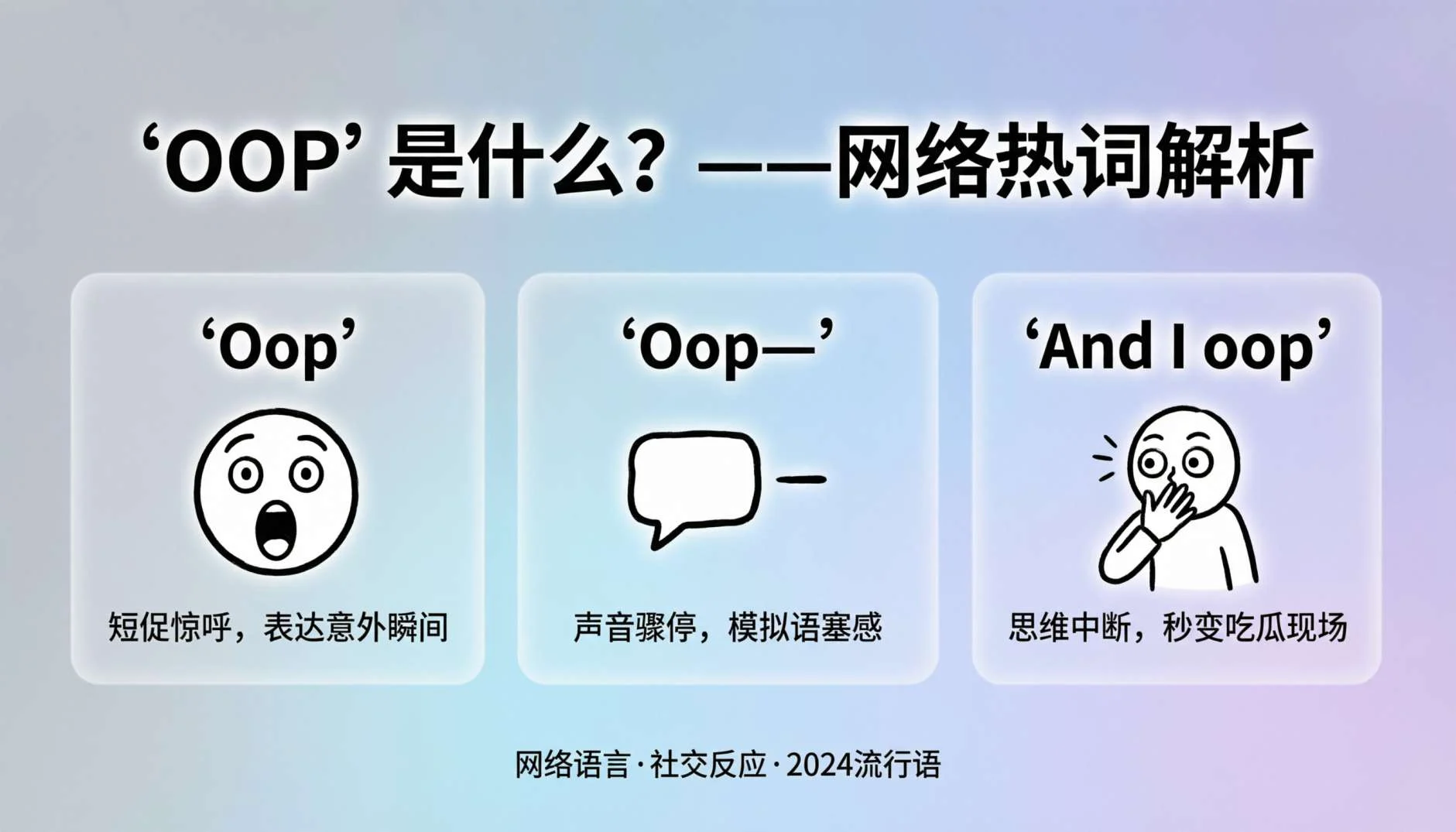
It’s most commonly written in one of these forms:
- “Oop” a short, standalone reaction to something unexpected.
- “Oop “ with a hyphen at the end, mimicking the sound of someone cutting themselves off.
- “And I oop” the full catchphrase version, used when something is so surprising it interrupts your train of thought.
- “I oop” is a slightly shorter variation of the phrase above.
The core feeling behind all of these is the same: something just happened that you didn’t see coming, and your brain briefly short-circuited in response.
OOP Meaning in Gen Z
Among Gen Z, “oop” is a quick reaction word used whenever something unexpected, embarrassing, funny, or shocking happens. Instead of typing a full response like “I can’t believe that happened,” many people reply with “oop” because it instantly shows surprise.
The expression became especially popular after the viral “and I oop” meme and remains common in texting, TikTok comments, Instagram replies, and Snapchat conversations. While it isn’t as trendy as it was a few years ago, many Gen Z users still use it as a lighthearted reaction.
Examples:
- “Oop, I didn’t expect that.”
- “Oop…that got awkward.”
- “OOP 😭”
In most conversations, “oop” isn’t meant to insult anyone. It’s simply a playful way to acknowledge an unexpected moment.
OOP Meaning on Snapchat, TikTok, Twitter, and Social Media
The meaning of “oop” stays almost the same across social media platforms.
Snapchat
People use “oop” after accidentally sending a Snap, opening someone’s story by mistake, or reacting to unexpected messages.
Example:
“Oop, wrong person 😂”
TikTok
On TikTok, “oop” usually appears in comments whenever a creator says something bold, funny, or unexpectedly honest.
Example:
“Oop…she really said that.”
Twitter (X)
On Twitter/X, “oop” often serves as a reaction to celebrity drama, viral tweets, or surprising news.
Example:
“Oop, this thread got interesting.”
If it’s Snapchat, TikTok, Instagram, or X, the word always carries the same basic feeling: surprise, amusement, or mild embarrassment.
Does OOP Mean Something Different From a Guy or a Girl?
The meaning of “oop” usually doesn’t change based on who sends it.
If a girl texts “oop,” she’s most likely reacting to something funny, awkward, surprising, or embarrassing.
If a guy texts “oop,” the meaning is generally identical. It simply shows a quick emotional reaction rather than a deep message or hidden intention.
Examples:
Girl:
“Oop…I wasn’t supposed to say that.”
Guy:
“Oop 😂 I forgot.”
Instead of looking at the sender’s gender, focus on the surrounding conversation because that’s what determines the meaning.
Does OOP Stand for Anything?
In texting, OOP is usually not an acronym. It’s simply a reaction word similar to saying “oops” or making a surprised sound.
However, outside internet slang, OOP can stand for completely different things depending on the context, including:
| Context | Meaning |
| Computer science | Object Oriented Programming |
| Business | Out Of Pocket |
| Text slang | Playful reaction to surprise |
If you’re reading a casual text message or social media comment, the slang meaning is almost always the correct one.
OOP Meaning on Reddit and Urban Dictionary
If you’ve searched for “oop meaning Reddit” or “oop meaning Urban Dictionary,” you’ll notice that users generally describe it the same way: a playful reaction to something unexpected or awkward.
Reddit discussions often explain that “oop” is simply a shorter, more casual version of “oops,” while Urban Dictionary entries usually emphasize its connection to the viral “and I oop” meme.
Although wording differs from one source to another, the overall meaning remains consistent across today’s internet.
Where Does “Oop” Come From?
“Oop” didn’t start as random internet noise. It has a specific, traceable origin, which is part of why it caught on so widely once people online started recognizing the reference.
The Original Video
The phrase traces back to a YouTube video posted by drag performer and RuPaul’s Drag Race alum Jasmine Masters in October 2015. In the clip, Masters was mid-rant about friends who can’t handle their alcohol when she accidentally bumped herself and let out a startled “and I oop” before continuing. Her genuine, unscripted reaction was funny enough that clips of the moment kept circulating in drag and LGBTQ+ online communities for the next several years.
How It Became a Mainstream Meme
The clip stayed relatively niche for a few years before exploding into mainstream internet slang around 2019, when TikTok users began remixing it into reaction videos and captions. It quickly became associated with the “VSCO girl” trend of that era, often paired with other filler expressions of the time like “sksksk.” Once it spread beyond TikTok to Twitter and Instagram, “and I oop” (and its shorter cousin “oop”) became a general-purpose way to react to anything startling, funny, or a little cringeworthy.
Why the Shortened Form Stuck
As the phrase spread, people naturally clipped it down. Typing the full “and I oop” felt like a lot for a quick reaction, so “oop” (and “oop “) became the efficient, everyday version useful in a text message, a comment, or a caption without losing the original meaning.
How People Use “Oop” in Real Conversations
“Oop” shows up across text, group chats, comment sections, and captions, almost always as a standalone reaction rather than part of a full sentence.
In Texting
- “Wait, you told your boss that? Oop.”
- “I just tripped in front of the whole office… oop “
- “She said WHAT to him? Oop, I need details.”
On Social Media
- Commenting “oop” under a video where someone says something unexpectedly blunt or shady.
- Captioning a photo of a small mishap, like a spilled drink or a wardrobe malfunction, with “oop “
- Reacting to a plot twist in a show or a surprising piece of gossip with “and I oop, wait what.”
In Professional or Semi-Formal Settings
“Oop” is casual slang, so it’s rarely used in professional writing. It does occasionally show up in relaxed workplace chat apps like Slack among coworkers who have an informal rapport, typically to react to a small, harmless mistake like sending a message to the wrong channel.
“Oop” vs. Similar Terms
Several expressions overlap with “oop” in meaning, but each carries a slightly different tone or use case.
| Term | Meaning | Typical Tone | Best Used For |
| Oop / Oop | Sudden surprise or minor blunder | Playful, quick | Reacting to something unexpected in real time |
| And I oop | Full version of the reaction; interrupted thought | Playful, exaggerated | Emphasizing shock or secondhand embarrassment |
| Oops | Standard acknowledgment of a small mistake | Neutral, sincere | Apologizing for or noting an actual error |
| Uh oh | Warning that something is about to go wrong | Cautious, concerned | Anticipating a problem before it fully happens |
| Yikes | Discomfort or disapproval at something awkward or bad | Judgmental, cringing | Reacting to something uncomfortable to watch or read |
| Sksksk | Laughter or excited emphasis (unrelated to surprise) | Excited, energetic | Expressing amusement, often paired with “and I oop” |
The biggest distinction to remember: “oops” is a sincere, mild apology for an actual mistake, while “oop” is more theatrical. It’s about reacting to something surprising, whether or not anyone actually did anything wrong.
Grammar and Punctuation Notes
“Oop” doesn’t follow strict grammar rules since it’s an interjection, but there are a few informal conventions worth knowing:
- It’s almost always lowercase, even at the start of a sentence, since it’s meant to feel casual and unpolished.
- The trailing hyphen in “oop “ is intentional. It visually represents a sentence getting cut off, similar to how a dash is used in scripted dialogue to show an interruption.
- It’s typically followed by a period, ellipsis, or line break rather than an exclamation point, since the tone is more “stunned pause” than “loud excitement.”
- It’s rarely pluralized or conjugated. You won’t see “oops” used this way, or “ooping,” in standard slang use.
Common Mistakes When Using “Oop”
- Confusing it with a genuine apology. “Oop” reacts to surprise; it doesn’t take responsibility for a mistake the way “oops” or “sorry” does. Using it after seriously hurting someone’s feelings can come across as dismissive.
- Overusing exclamation points. Adding “Oop!!!” with heavy punctuation can make the reaction feel forced rather than natural.
- Using it in formal writing. “Oop” belongs in casual digital conversation, not in emails, cover letters, or academic writing.
- Misreading tone in serious contexts. Responding “oop” to genuinely bad news (like an injury or a serious problem) can come across as flippant, even if that’s not the intent.
When to Use (and Avoid) “Oop”
Good times to use it:
- Reacting to a funny mistake, a plot twist, or an awkward moment in a casual chat.
- Commenting on lighthearted social media content.
- Texting a friend about a minor, non-serious mishap.
Times to avoid it:
- Formal emails, resumes, school papers, or workplace reports.
- Conversations involving real distress, grief, or serious problems.
- Messages to people who may not be familiar with internet slang, such as older relatives or new professional contacts, where it could come across as confusing rather than funny.
Quick Reference Summary
- “Oop” = a quick reaction to something surprising, awkward, or mildly embarrassing.
- Origin: traces back to a 2015 Jasmine Masters video and went viral on TikTok around 2019.
- Full form: “and I oop,” often shortened for everyday texting.
- Not the same as “oops”: “oop” reacts to surprise; “oops” apologizes for an actual mistake.
- Best used casually, not in formal or serious writing.
FAQ
Is “oop” the same as “oops”?
Not exactly. “Oops” is a sincere acknowledgment of a small mistake, while “oop” is more of a dramatic, playful reaction to something surprising, whether or not an actual mistake happened.
What does “oop ” with a dash mean?
The dash represents a sentence getting cut off mid-thought, like the speaker gasped and stopped talking because something unexpected happened.
Where did “and I oop” come from?
It comes from a 2015 YouTube video by drag performer Jasmine Masters, who used the phrase after an unscripted, surprising moment. It became a viral catchphrase on TikTok around 2019.
Is “oop” still used in 2026?
While it’s less of a trending catchphrase than it was during its 2019 2020 peak, “oop” and “oop ” remain common, low-key reactions in everyday texting and comment sections.
Can I use “oop” in a work chat?
It depends on your workplace culture. In relaxed, informal team chats, it can work fine for small mishaps, but it’s best avoided in emails or more formal internal communication.
Does “oop” always relate to embarrassment?
Not always. It can also express excitement, mild shock, or amusement. The common thread is that something unexpected just happened.
Is “sksksk” the same as “oop”?
No. “Sksksk” typically expresses laughter or excitement and is unrelated in meaning to “oop,” though the two were often used together during the VSCO girl slang trend of 2019.
Conclusion
“Oop” is a small word that carries a very specific feeling: the split-second reaction to something surprising, awkward, or funny. Rooted in a genuine, unscripted moment from a 2015 video, it grew into one of the internet’s most recognizable reaction words by 2019 and has stuck around as an easy, casual way to react in texts and comments ever since. Used in the right context casual chats, social media captions, lighthearted reactions it adds personality and humor to a conversation without needing a full sentence to explain the feeling.

I am JohnsonMili, a passionate Prayer Writer and Spiritual Content Researcher dedicated to illuminating the paths of those seeking solace and inspiration.Through my platform, PrayersInfo.com, I share powerful prayers and uplifting faith content designed to foster a deeper connection with God.My mission is to guide readers toward peace and hope, empowering them to navigate life’s challenges with spiritual resilience.Join me on this transformative journey as we explore the profound impact of prayer and faith together.