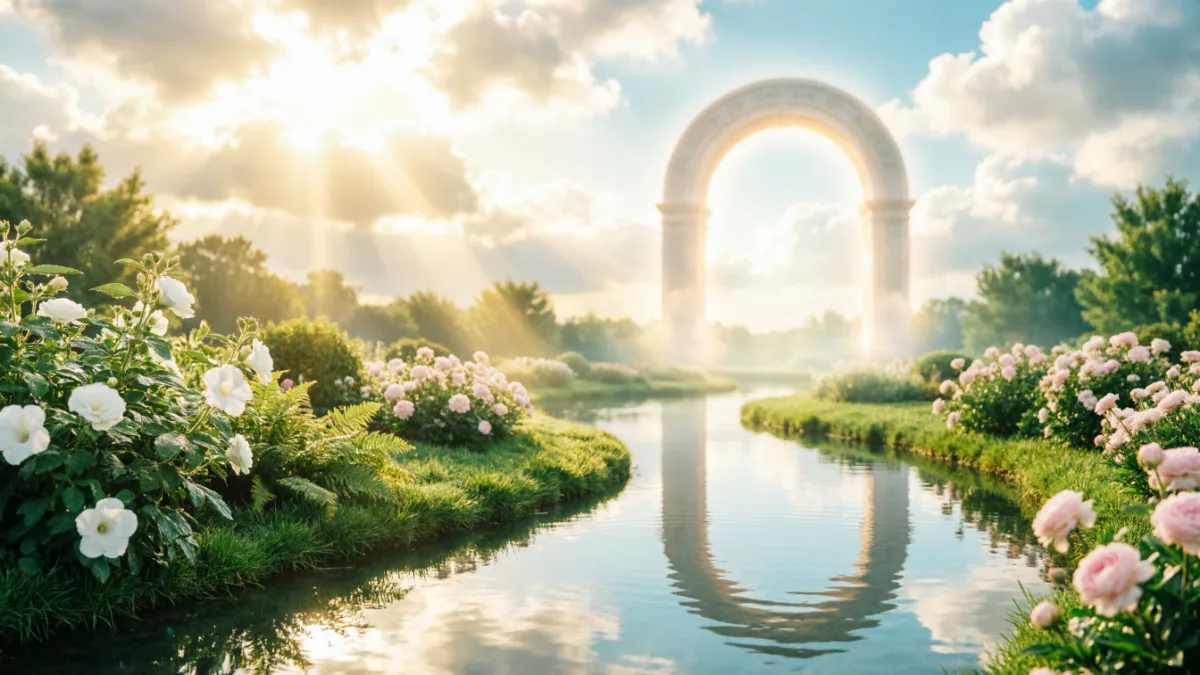
No one alive can describe heaven from personal experience, but the Bible, the Quran, and centuries of religious teaching offer detailed pictures: a place of light, peace, and the presence of God, often depicted with imagery such as gold, crystal, gardens, and gemstones.
These descriptions are largely symbolic, meant to communicate glory and perfection rather than give a literal floor plan.
This article walks through what different traditions and popular beliefs say heaven looks like, what happens there, and how it compares to life on earth.
Quick Answer
No one can describe heaven from personal earthly experience, but sacred texts offer vivid pictures of it. The Bible describes heaven as God’s dwelling place, filled with peace, joy, and imagery such as streets of gold and the New Jerusalem. At the same time, the Quran portrays heaven (Jannah) as beautiful gardens with flowing rivers and eternal blessings. Many believers understand these descriptions as symbolic, expressing the perfection and glory of heaven rather than its exact physical appearance.
What Does Heaven Look Like According to the Bible
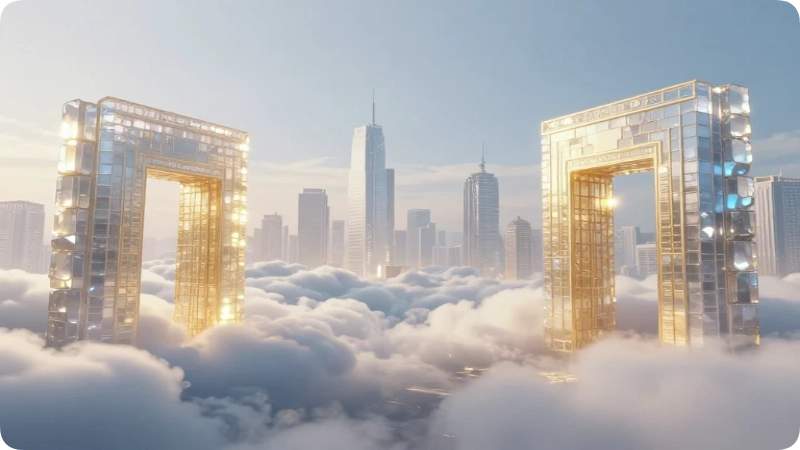
The Bible describes heaven mainly through images rather than a single fixed picture. In Revelation 21, John pictures the New Jerusalem as a city with jasper walls, streets of pure gold “like transparent glass,” and gates carved from single pearls.
Other passages describe heaven as God’s throne, a place of light with no need for sun or moon, and a home free of pain, tears, or death.
Bible scholars generally interpret these images as symbols of glory, purity, and permanence rather than as descriptions of literal architecture.
The consistent theme across the Bible is not the scenery but the presence of God as the center of heaven.
What Does Heaven Look Like When We Die
Christian teaching generally holds that at death, a believer’s spirit goes into God’s presence, sometimes called the “intermediate state,” while final descriptions of heaven in Revelation point toward a future renewed creation. Denominations differ on details, but the shared idea is a transition from earthly life into peace, rest, and closeness with God.
Because no one living can observe this moment directly, theologians base most teachings about it on their interpretation of Scripture rather than on firsthand evidence. Different Christian traditions (Catholic, Protestant, Orthodox) also vary somewhat on intermediate-state teaching, so it is worth checking with a specific church or tradition for its exact position.
What Does Heaven Look Like in Islam

In Islam, the Quran describes Jannah (paradise) as a place of gardens with flowing rivers, refreshing shade, fruit trees, and magnificent palaces. It presents Jannah as the eternal reward for those who believe in God and live righteously. Descriptions include rivers of water, milk, honey, and wine that does not intoxicate, along with comfort, peace, and freedom from suffering.
Islamic scholars generally teach that Jannah has multiple levels, with the highest reserved for the most devoted believers, and that its true nature is beyond full human comprehension. As in Christianity, the imagery is understood as a way to convey reward and closeness to God rather than a literal map.
What Does Heaven Look Like According to the Bible Verse
A few verses are quoted most often when people ask this question. Revelation 21:4 says God “will wipe away every tear,” and there will be no more death, mourning, crying, or pain. Revelation 21:21 describes the city’s street as “pure gold, transparent as glass,” and Revelation 22:1 describes a river of the water of life flowing from God’s throne.
Many readers interpret these verses together rather than in isolation because Revelation uses a series of images—light, gold, precious gems, rivers, and trees—to create an overall picture of glory and restoration instead of presenting a single snapshot.
What Does Heaven Look Like Right Now
This is one of the most common questions people ask, and honestly, no one can answer it with certainty. Religious teaching generally describes heaven as existing outside normal time and space, so applying “right now” to it is more of a human way of asking than something scripture directly addresses.
Most Christian traditions agree that heaven, in its present state, offers peace and God’s presence to those who die in faith. At the same time, Scripture does not describe heaven’s current appearance in detailed, real-time terms, so many details remain beyond human knowledge.
What Does Heaven Look Like According to the Quran
The Quran describes Jannah using vivid, sensory language: gardens beneath which rivers flow, cool shade, comfortable seating, fine silk garments, and abundant fruit within easy reach. Several verses (for example, in Surah Ar-Rahman and Surah Al-Insan) describe rewards including flowing springs, fragrant surroundings, and companionship in a peaceful setting.
Islamic teaching holds that these descriptions, while physical and detailed, still fall short of describing the full reality, since the Quran and hadith both suggest that what awaits believers is greater than anything imaginable in worldly terms.
What Does Heaven Look Like for Kids
When explaining heaven to children, most parents and teachers simplify the imagery into something reassuring and easy to picture: a beautiful, happy place with no sickness, no sadness, and no goodbyes, where loved ones who believed can be together with God. Simple comparisons gardens, light, family reunions tend to work better for young children than abstract theology.
It also helps to explain that no one has fully seen heaven and returned to describe it in detail. At the same time, you can reassure the child by sharing what their faith tradition teaches about comfort, love, and God’s care.
Letting a child ask questions, rather than giving one rehearsed answer, usually helps them process grief or curiosity better.
Does Heaven Look Like Earth
Heaven is often described using earthly images: gardens, rivers, light, cities, because these are the only reference points humans have. But most theologians caution against assuming heaven is simply a nicer version of earth. The Bible’s language in Revelation actually points to a “new heaven and a new earth,” suggesting renewal and transformation rather than a copy of the world we know.
Although heaven may share familiar features such as light, beauty, relationships, and rest, most Christian traditions describe it as fundamentally different from earthly life, not merely a better version of it.
What Do People Do in Heaven All Day?
Scripture does not give a detailed daily schedule, but common themes across Christian and Islamic teaching include worship, rest, fellowship, and enjoying God’s presence without the limits, needs, or exhaustion of earthly life. Revelation describes ongoing praise and worship as part of heaven’s activity.
Many theologians describe heaven less as “doing tasks” and more as living in unbroken joy, peace, and closeness with God and other believers, without describing it as an eternal, monotonous routine.
What Do Humans Look Like in Heaven?
Christian teaching often points to the idea of a “glorified body” described in passages like 1 Corinthians 15 as imperishable, powerful, and free from the effects of illness, aging, or injury. The exact physical appearance is not spelled out, but the emphasis is on wholeness and transformation rather than the body’s earthly flaws.
Islamic teaching similarly describes believers in Jannah as being restored to youthful, perfect form, free of pain or blemish. In both traditions, the underlying idea is renewal rather than an exact physical description.
Will We Have Bodies in Heaven?
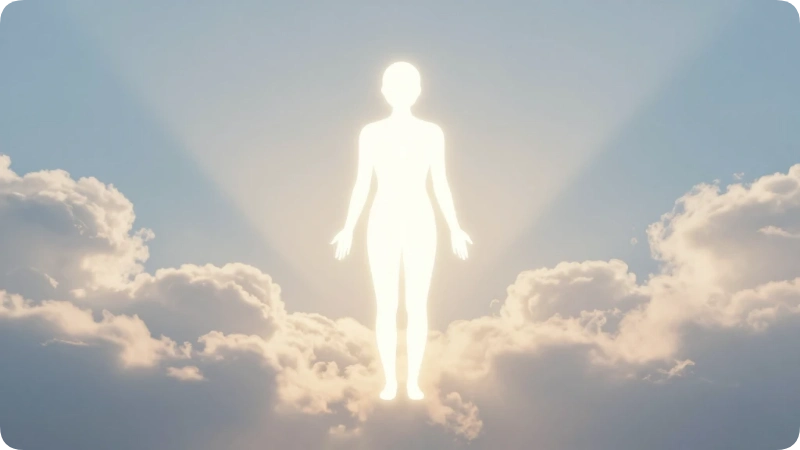
In Christian theology, the general teaching (especially rooted in 1 Corinthians 15) is that believers will ultimately have resurrected, “glorified” bodies rather than existing only as spirits forever. This is different from popular culture’s image of ghost-like souls floating without form.
Islamic teaching also affirms bodily resurrection, where individuals are raised and rewarded or judged in bodily form. Both traditions agree bodies will exist in the eternal state, even though the details of what that body is like remain described only in broad, symbolic terms.
Will We Have Houses in Heaven?
Some Christians point to John 14:2, where Jesus says, “In my Father’s house are many rooms,” as evidence of individual dwelling places prepared for believers. This verse is widely quoted, though scholars differ on whether it should be read literally or as a broader promise of belonging and being welcomed.
Islamic descriptions of Jannah also include palaces and dwellings as part of the reward for the righteous. In both cases, “houses” function as a symbol of permanence, belonging, and personal reward rather than a guaranteed architectural detail.
Will We Sleep in Heaven?
Most theological teaching suggests heaven will not require sleep the way earthly bodies do, since sleep exists to restore a body that gets tired, and heaven is generally described as free from fatigue, sickness, and the limitations of earthly life. Revelation’s description of continuous worship and light (with “no night there”) supports this idea.
This is one of the more speculative questions, since scripture does not directly say “you will/will not sleep,” so most answers here are reasonable inferences rather than direct statements.
What Happens in 90 Minutes in Heaven?
“90 Minutes in Heaven” tells the popular personal story of author 90 Minutes in Heaven by Don Piper. After a serious car accident, Piper says he had a near-death experience in which he briefly entered heaven before returning to life. In the book, he describes brilliant light, heavenly gates, joyful worship, and reunions with deceased loved ones.
Readers should view this account as a personal testimony rather than a scientific study or a scriptural source. It reflects one person’s reported experience instead of established religious doctrine. Although many people discuss near-death experiences, science cannot verify them, and different faith traditions place different levels of trust in these accounts.
Will We Have Clothes in Heaven?
The book of Revelation frequently describes believers in heaven wearing white robes (for example, Revelation 7:9 and 6:11). These robes generally symbolize purity, righteousness, and celebration rather than serving as a literal dress code. Islamic descriptions of Jannah also mention fine silk and green garments as part of paradise’s imagery.
Like many descriptions of heaven, scripture often uses clothing to represent spiritual purity instead of providing literal fashion instructions. Many readers therefore understand these passages as symbolic rather than literal.
Do People Age in Heaven?
Most Christian and Islamic teachings describe heaven as a place without decay, illness, or aging because these conditions belong to a fallen, mortal world rather than eternal life. Both traditions generally teach that God restores people to wholeness instead of allowing them to continue aging forever.
Under this view, someone who dies at an older age or as a young child enters heaven fully restored. However, scripture does not specify the exact age or appearance a person has in heaven.
What Is My Mom Doing in Heaven?
This is one of the most personal and emotional questions people search for, especially after losing a parent. While no one can say with certainty what a specific loved one is doing right now, most faith traditions teach that those who died in faith are at peace, free of pain, and in God’s presence.
If you’re grieving, it can help to hold onto what your own faith tradition teaches about comfort and reunion, and to lean on people around you a pastor, imam, counselor, or trusted friend who can walk through these feelings with you rather than trying to find a precise answer online.
Will We Eat and Drink in Heaven?
Some biblical passages hint at eating and drinking in the eternal state; for example, the idea of a future wedding feast in Revelation, and Jesus telling His disciples He would drink “the fruit of the vine” again in His Father’s kingdom (Matthew 26:29). This suggests eating and drinking may have a place, though more as celebration and fellowship than as physical necessity.
The Quran is more explicit, describing abundant fruit, drink, and food as part of the reward of Jannah. In both traditions, however, eating in heaven is understood as joy and abundance rather than something needed to survive.
Has the DNA of Jesus Been Found?
No. Scientists and archaeologists have not verified or authenticated any preserved DNA from Jesus. Claims of this kind occasionally circulate online or appear in sensational media, but mainstream science, archaeology, and Christian scholarship do not support them. No credible institution has produced evidence that confirms such material.
DNA naturally breaks down over time, and historians and archaeologists have not identified any confirmed physical remains of Jesus for scientific testing. For that reason, people should approach claims about “Jesus DNA” with skepticism unless credible, peer-reviewed evidence supports them. At present, no such evidence exists.
Will Babies Still Be Babies in Heaven?
This is a tender question for many grieving parents. While scripture doesn’t describe this in detail, many theologians lean toward the idea that all people in heaven, including those who died as infants, experience wholeness and completeness rather than staying frozen at the age they died.
Beliefs vary by denomination and individual interpretation, and this remains one of the more comforting but least precisely defined areas of teaching, so many pastors encourage grieving families to focus on the promise of peace and reunion rather than a specific physical answer.
Will We Live Alone in Heaven?
Most teaching describes heaven as deeply communal rather than solitary, gathering of believers, angels, and the presence of God together, often pictured as a city or a great multitude worshiping as one. Revelation’s imagery of a city, a wedding feast, and a “great multitude” all point toward togetherness rather than isolation.
Many religious traditions highlight this sense of community as one of heaven’s greatest comforts. Along with perfect peace, heaven offers restored relationships, deep fellowship, and a lasting sense of belonging.
What Color Will We Wear in Heaven?
White is the color most associated with heavenly clothing in the Bible, appearing repeatedly in Revelation as a symbol of purity and victory. Some passages also mention other imagery, such as gold, but white robes remain the most consistently described detail.
As mentioned earlier, many readers understand this imagery as symbolic. The white robes represent purity and a restored relationship with God rather than serving as a literal, universal dress requirement.
Is Saying “Oh Jeez” a Sin?
This question usually comes from concern that “jeez” is a disguised way of saying “Jesus” as an exclamation, which some people worry could count as using God’s name lightly or in vain (referencing the biblical instruction not to take God’s name in vain, Exodus 20:7). Views on this vary widely among Christians.
Many take a relaxed view, treating “jeez” as a mild, common expression with little conscious connection to reverence for God’s name. Others prefer to avoid it out of caution or personal conviction. Christians generally approach this as a matter of personal conscience and denominational teaching rather than looking to Scripture for a direct answer, since Scripture does not mention it by name.
FAQ
Will pets or animals be in heaven?
Scripture doesn’t give a direct, detailed answer, and Christian views vary; some point to Isaiah’s images of restored creation and peaceful animals as hopeful evidence, while others see it as symbolic rather than literal. There is no single, universally agreed answer.
Will we remember our life on earth in heaven?
Many theologians believe people retain their memories and personal identity in some form because Christian teaching generally describes heaven as a place of continuity and relationship. For example, believers often expect to recognize their loved ones rather than lose all sense of who they were. This view comes from the overall context of Scripture instead of a single passage that states it as a clear rule.
Will we recognize our loved ones in heaven?
Most Christian and Islamic teaching affirms that recognition and reunion with loved ones are part of heaven’s comfort, often pointed to as one of its central joys. Exact details of how recognition works are not spelled out.
What language will people speak in heaven?
The Bible and Quran do not specify a particular language spoken in heaven. This is generally considered outside the scope of what scripture addresses, and most scholars avoid speculating beyond what the texts actually say.
Is heaven the same as paradise?
Many Christian and Islamic traditions use the terms “paradise” and “heaven” closely together or even interchangeably. However, some traditions draw subtle distinctions. For example, they may use “paradise” to describe an intermediate state or a specific part of the afterlife rather than heaven as a whole. Translation choices and religious tradition often shape how people use these terms.
How is heaven different from hell?
Scripture generally describes heaven as a place of light, peace, and closeness with God. In contrast, it portrays hell as a place of separation from God, darkness, and suffering. Many Christian traditions present these as opposite outcomes connected to faith and the way a person lived.
Can living people visit heaven and come back?
Traditional teaching holds that heaven is not something the living can visit and return from in a verifiable way. Personal testimonies of near-death experiences exist (like the one referenced earlier), but these are individual accounts, not confirmed doctrine or scientific evidence.
Conclusion
Heaven is described across scripture and tradition using powerful, symbolic imagery: land, gardens, light, rivers, white robes meant to communicate glory, peace, and closeness with God rather than a literal blueprint.
Christianity and Islam differ in some details but share a common core: heaven is a place free from pain, aging, and separation, where the faithful are reunited with God and with each other.
While many specific questions (schedules, appearances, exact daily life) remain open to interpretation, the consistent thread across these traditions is comfort, restoration, and eternal peace.
I am JohnsonMili, a passionate Prayer Writer and Spiritual Content Researcher dedicated to illuminating the paths of those seeking solace and inspiration. Through my platform, PrayersInfo.com, I share powerful prayers and uplifting faith content designed to foster a deeper connection with God. My mission is to guide readers toward peace and hope, empowering them to navigate life’s challenges with spiritual resilience. Join me on this transformative journey as we explore the profound impact of prayer and faith together.