
An ear infection usually shows up as redness and swelling around or inside the ear, a bulging or cloudy eardrum, fluid or pus draining from the ear canal, and sometimes a swollen outer ear or tender lymph nodes near the jaw.
Because most of the infection happens deep inside the ear, many of these changes can only be confirmed by a doctor using a lighted instrument called an otoscope but there are visible clues you can watch for at home, especially in young children who can’t describe what they’re feeling.
Ear infections are one of the most common reasons people, especially kids, visit a doctor. Knowing what one actually looks like and how it differs from normal ear irritation, earwax buildup, or a bug bite can help you decide how urgent the situation is and what to expect during a medical exam.
This guide walks through the visible and clinical signs of each major type of ear infection, what a healthcare provider sees during an exam, and when those signs mean you should seek care right away.
The Three Types of Ear Infections
Ear infections can affect different parts of the ear, and each type has different symptoms and visible signs.
1. Outer Ear Infection (Otitis Externa)
Also called swimmer’s ear, this infection affects the ear canal. It may cause visible redness, swelling, itching, drainage, and pain when the outer ear is touched or pulled.
2. Middle Ear Infection (Otitis Media)
This is the most common type in children and occurs behind the eardrum. It usually cannot be seen from the outside, but a doctor may see a red, bulging, or cloudy eardrum using an otoscope.
3. Inner Ear Infection (Labyrinthitis)
This affects the deepest part of the ear involved in balance and hearing. It usually does not cause visible changes but may lead to dizziness, balance problems, ringing in the ear, or hearing changes.
Ear Infection Pictures vs Normal Ear: What Differences Should You Notice?
Content:
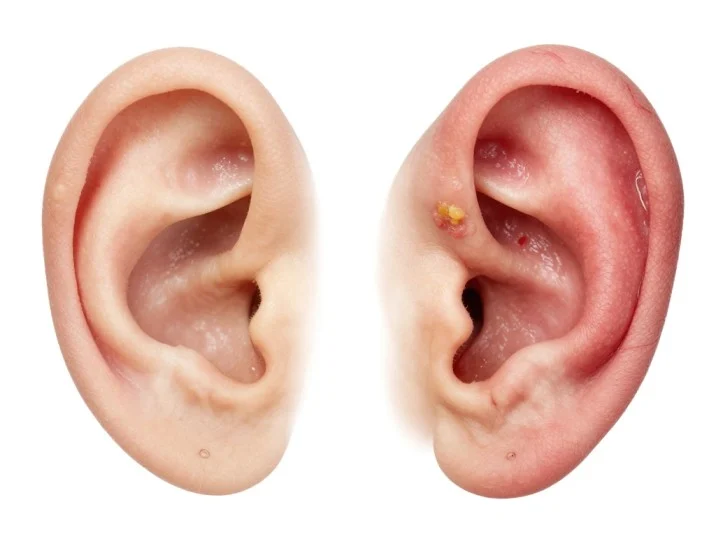
A normal ear and an infected ear can look very different, but the changes depend on where the infection is located. Some ear infections create visible changes on the outside, while others only appear when a doctor examines the eardrum.
A normal outer ear usually has skin that looks similar to the surrounding face, with no significant swelling, redness, drainage, or tenderness. The ear canal may contain some earwax, which is a normal protective substance.
An infected outer ear may look red, swollen, irritated, or narrowed. You may notice crusting, moisture, or drainage around the opening of the ear canal.
A normal eardrum viewed through an otoscope usually appears:
- Pearly gray or slightly translucent
- Smooth and intact
- Slightly curved inward
- With visible light reflection
An infected eardrum may appear:
- Red or inflamed
- Bulging outward
- Cloudy instead of clear
- Less movable during examination
- With fluid trapped behind it
Remember that pictures online can be helpful for learning, but they cannot replace an ear examination because many conditions can look similar.
What Does an Ear Infection Look Like Through an Otoscope?
Content:
An otoscope gives healthcare providers a close view of the ear canal and eardrum. This is usually the most reliable way to identify a middle ear infection because the infected area is hidden behind the eardrum.
During an examination, an infected ear may show:
Bulging Eardrum
A healthy eardrum normally curves slightly inward. During a middle ear infection, pressure from trapped fluid can push the eardrum outward.
Cloudy Appearance
Instead of looking clear and pearly gray, the eardrum may appear cloudy because fluid has collected behind it.
Redness and Inflammation
The eardrum may appear pink, red, or irritated due to inflammation.
Reduced Movement
Doctors may use a small puff of air to check movement. A healthy eardrum moves easily, while an infected one may move less because of fluid buildup.
An otoscope can also help identify other problems that may look like an infection, such as earwax blockage, a damaged eardrum, or fluid without infection.
What Does an Ear Infection Look Like in a Baby?
Content:
Babies cannot explain ear pain, so parents often notice changes in behavior before they notice visible ear symptoms.
Signs that may suggest an ear infection in a baby include:
- Pulling or rubbing the ear repeatedly
- Crying more than usual
- Trouble sleeping
- Increased fussiness when lying down
- Difficulty feeding
- Fever
- Fluid draining from the ear
- Less interest in sounds or voices
The outside of the ear may look completely normal because many baby ear infections happen behind the eardrum.
A baby with these symptoms should be evaluated by a healthcare professional, especially if they are younger than 6 months, have a fever, or seem unusually uncomfortable.
What Does an Ear Infection Look Like in a Toddler?
Content:
Toddlers often show clearer behavioral signs because they can react to discomfort but may still struggle to explain the problem.
Common signs include:
- Holding or pulling one ear
- Saying their ear hurts
- Becoming more irritable
- Waking frequently at night
- Losing appetite
- Having trouble hearing soft sounds
- Developing fever or drainage
The ear itself may not look unusual from the outside. A toddler may have a middle ear infection even when the outer ear appears completely normal.
What Does an Ear Infection Look Like in a Child?
Content:
Older children may describe symptoms more clearly, but visible signs can still vary.
A child with an ear infection may have:
- Redness around the ear opening
- Ear drainage
- Swelling of the outer ear
- Signs of pain when touching the ear
- Reduced hearing
- Fever
Children with swimmer’s ear often have visible irritation around the ear canal, while middle ear infections usually require an otoscope to confirm.
What an Outer Ear Infection Looks Like
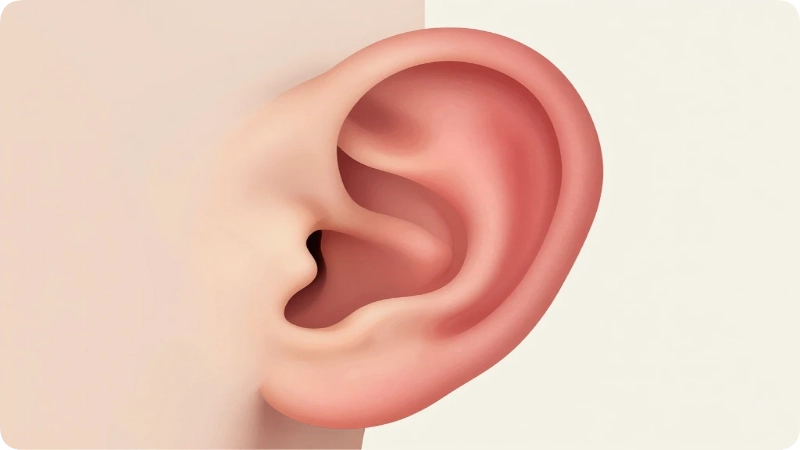
Swimmer’s ear is usually the easiest type to actually see, because it affects the parts of the ear you can look at directly.
Common visible signs include:
- Redness and swelling of the skin lining the ear canal, sometimes extending to the outer ear itself
- Flaky, scaly, or crusty skin around the canal opening
- Yellow, white, or clear discharge that may have an odor
- A visibly narrowed ear canal opening due to swelling
- Tenderness when the outer ear (pinna) or the small flap in front of the ear canal is touched or pulled
In more advanced cases, the entire outer ear can look puffy or reddened, and the skin around it may feel warm. Unlike a middle ear infection, swimmer’s ear often gets more painful when you touch or move the ear, which is a useful clue for telling the two apart.
What a Middle Ear Infection Looks Like From the Outside
A middle ear infection is trickier to identify visually, since the actual infection sits behind the eardrum, out of view. Still, there are external signs that often go along with it:
- Fluid draining from the ear canal if the eardrum has developed a small tear or perforation from pressure buildup
- Mild redness at the ear canal opening, though this is less pronounced than with an outer ear infection
- Swelling behind the ear in rare, more serious cases where infection spreads to the bone (mastoiditis) this can push the outer ear forward and is considered a medical emergency
- A child tugging, pulling, or rubbing at one ear repeatedly
Because the eardrum itself is hidden from view, the most reliable way to “see” a middle ear infection is through a clinical exam rather than a home inspection.
Ear Drops for Ear Infection: When They Help and When to Avoid Them
Content:
Ear drops can help with some types of ear problems, but they are not appropriate for every ear infection.
For outer ear infections (swimmer’s ear), doctors often recommend prescription ear drops that target bacteria and reduce inflammation.
For middle ear infections, ear drops usually do not treat the infection because the problem is behind the eardrum. Treatment may involve pain relief, observation, or antibiotics depending on the situation.
Avoid putting drops into the ear if:
- You do not know what type of infection you have
- There may be a hole in the eardrum
- There is bloody drainage
- A doctor has not confirmed the cause
The safest choice is to use ear drops recommended specifically for your condition.
What a Doctor Sees Inside the Ear
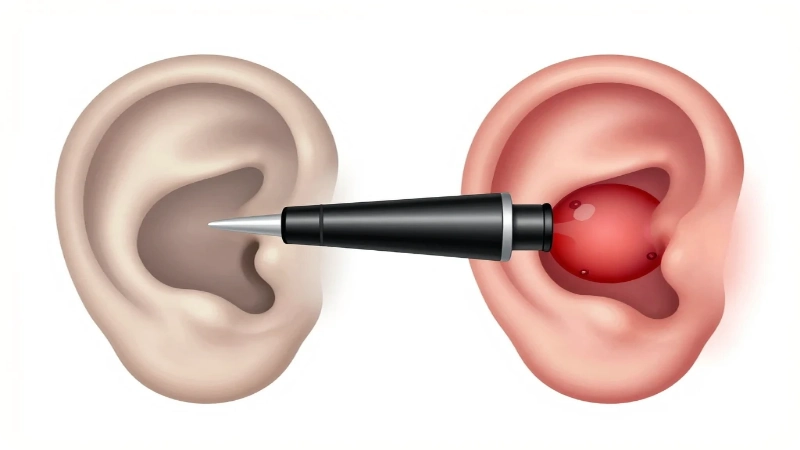
When a healthcare provider examines a suspected ear infection, they use an otoscope a handheld device with a light and magnifying lens to look directly at the eardrum (tympanic membrane). This is where the clearest visual diagnosis happens.
A healthy eardrum is typically described as pearly gray, translucent, and slightly concave, with visible landmarks like tiny bones and light reflections.
With a middle ear infection, the provider commonly sees:
| Feature | Healthy Eardrum | Infected Eardrum |
| Color | Pearly gray or light pink | Red or dark pink |
| Shape | Slightly concave (curved inward) | Bulging outward |
| Clarity | Translucent, landmarks visible | Cloudy or opaque |
| Movement | Moves with air puff test | Reduced or no movement |
| Fluid | None visible | Fluid level or bubbles behind the membrane |
This bulging, reddened, cloudy appearance is the clearest sign a doctor uses to confirm a middle ear infection, and it’s something that generally can’t be assessed without the right equipment.
Ear Infection Signs in Babies and Toddlers

Infants and young children often can’t say “my ear hurts,” so caregivers have to rely on behavioral and physical clues instead of a direct description.
Watch for:
- Tugging, pulling, or batting at one or both ears
- Increased fussiness, especially when lying down
- Trouble sleeping or waking frequently at night
- Fluid draining from the ear
- Balance problems or clumsiness
- Reduced response to quiet sounds
- Low grade fever
- Reduced appetite, particularly with bottle or breastfeeding, since sucking and swallowing can change ear pressure and increase discomfort
None of these signs alone confirms an ear infection, but a combination of several especially ear tugging plus fussiness and fever is a good reason to schedule a pediatric visit.
Ear Infection vs. Normal Ear: Quick Comparison
It’s easy to confuse a mild ear infection with everyday irritation, earwax buildup, or allergies. Here’s a simple side by side comparison.
| Sign | Likely Normal | Possible Infection |
| Redness | Mild, only after scratching or cold weather | Persistent redness with swelling |
| Pain | None or very mild | Noticeable, often worse lying down |
| Discharge | None, or normal earwax | Pus like, watery, or foul smelling fluid |
| Hearing | Unaffected | Muffled or reduced |
| Fever | Absent | Often present, especially in children |
| Touch sensitivity | Minimal | Painful when ear is touched or pulled (outer infection) |
If several of the “possible infection” signs appear together, it’s worth having the ear examined rather than waiting to see if it resolves on its own.
When to See a Doctor
Certain signs point to a need for prompt medical attention rather than home monitoring:
- Fever above 102°F (39°C), especially in infants under 6 months
- Sudden hearing loss or persistent muffled hearing
- Swelling, redness, or tenderness behind the ear
- Severe pain that isn’t controlled by over the counter pain relief
- Discharge that is bloody or continues for more than a day or two
- Symptoms in a newborn or very young infant
- Dizziness, loss of balance, or facial drooping
These can indicate a more serious infection or a complication that needs prescription treatment or, occasionally, urgent care.
Common Misconceptions About Ear Infection Appearance
“If I can’t see anything, it’s not an infection.” Most middle ear infections aren’t visible without an otoscope, since the eardrum blocks direct view of the infected area.
“Ear discharge always means a bad infection.” Some drainage can be from a minor, self limiting issue like a small skin abrasion in the canal, though persistent or foul smelling discharge should still be checked.
“Redness always means infection.” Redness can come from crying, cold exposure, allergies, or minor irritation, not just infection context and accompanying symptoms matter more than color alone.
“Only kids get ear infections.” Adults can get both outer and middle ear infections, though middle ear infections are less common in adults due to differences in ear anatomy that develop with age.
FAQs
What Is Often Mistaken for an Ear Infection?
Several conditions can cause ear pain or pressure without being an actual infection, including:
- Earwax blockage
- Allergies
- Sinus congestion
- Teething discomfort in babies
- Jaw joint problems (TMJ)
- Ear canal irritation from earbuds or cotton swabs
- Water trapped after swimming
Because these problems can feel similar, an ear examination may be needed to identify the true cause
Will an Ear Infection Go Away on Its Own?
Some mild ear infections improve without antibiotics, especially certain middle ear infections. However, the right approach depends on the person’s age, symptoms, severity, and type of infection.
Medical evaluation is recommended when there is:
- Severe pain
- High fever
- Symptoms lasting more than a few days
- Ear drainage
- Hearing problems
- Symptoms in very young babies
A healthcare provider can determine If monitoring, medication, or another treatment is needed.
How Can I Tell If My Ear Has an Infection?
Common signs of an ear infection include ear pain, pressure, muffled hearing, drainage, itching, fever, or tenderness around the ear.
You may suspect an infection if:
- Pain continues or becomes worse
- Hearing suddenly feels blocked
- Fluid comes from the ear
- The outer ear becomes swollen or painful
- Symptoms appear after a cold or swimming
Because ear pain can also come from allergies, jaw problems, earwax buildup, or irritation, an examination is sometimes needed to know the exact cause.
Can You Visually See an Ear Infection?
Sometimes, but not always. Outer ear infections may cause visible redness, swelling, crusting, or drainage that you can see.
However, most middle ear infections occur behind the eardrum, meaning you cannot confirm them just by looking at the outside of the ear. A doctor usually needs an otoscope to examine the eardrum and check for signs such as bulging, cloudiness, or trapped fluid.
Can you actually see a middle ear infection with the naked eye?
No. The middle ear sits behind the eardrum, so a middle ear infection can only be properly seen with an otoscope during a medical exam, not by looking at the outside of the ear.
What color is an eardrum when infected?
An infected eardrum typically appears red or dark pink and often looks bulging and cloudy instead of its normal pearly gray, translucent appearance.
Is ear discharge always a sign of infection?
Not always, but persistent, discolored, or foul smelling discharge is a common sign of infection and generally warrants a medical evaluation.
Can an ear infection look like a pimple or bug bite?
An outer ear infection or an infected hair follicle in the ear canal can sometimes resemble a small bump or pimple, which is why a professional exam helps tell the difference from a true infection.
Do ear infections look different in adults versus children?
The underlying signs redness, swelling, drainage, bulging eardrum are similar, but children more often show behavioral signs like ear tugging since they can’t describe symptoms verbally.
Can allergies make an ear look infected when it isn’t?
Yes, allergies can cause redness, itching, and fluid buildup that mimics some ear infection symptoms, so a proper exam is the most reliable way to tell them apart.
How long does it take for visible symptoms to appear after an infection starts?
Symptoms can develop within a day or two of an underlying cold, sinus infection, or water exposure, though timing varies depending on the type and cause of the infection.
Key Takeaway
An ear infection’s appearance depends heavily on which part of the ear is affected. Outer ear infections often show visible redness, swelling, and discharge you can spot yourself, while middle ear infections mostly hide behind the eardrum and require a doctor’s otoscope to confirm the classic bulging, red, cloudy appearance.
Paying attention to accompanying symptoms of pain, fever, hearing changes, and behaviour in young children is just as important as what you can see, and persistent or worsening signs are always worth a professional evaluation.

I am JohnsonMili, a passionate Prayer Writer and Spiritual Content Researcher dedicated to illuminating the paths of those seeking solace and inspiration. Through my platform, PrayersInfo.com, I share powerful prayers and uplifting faith content designed to foster a deeper connection with God. My mission is to guide readers toward peace and hope, empowering them to navigate life’s challenges with spiritual resilience. Join me on this transformative journey as we explore the profound impact of prayer and faith together.