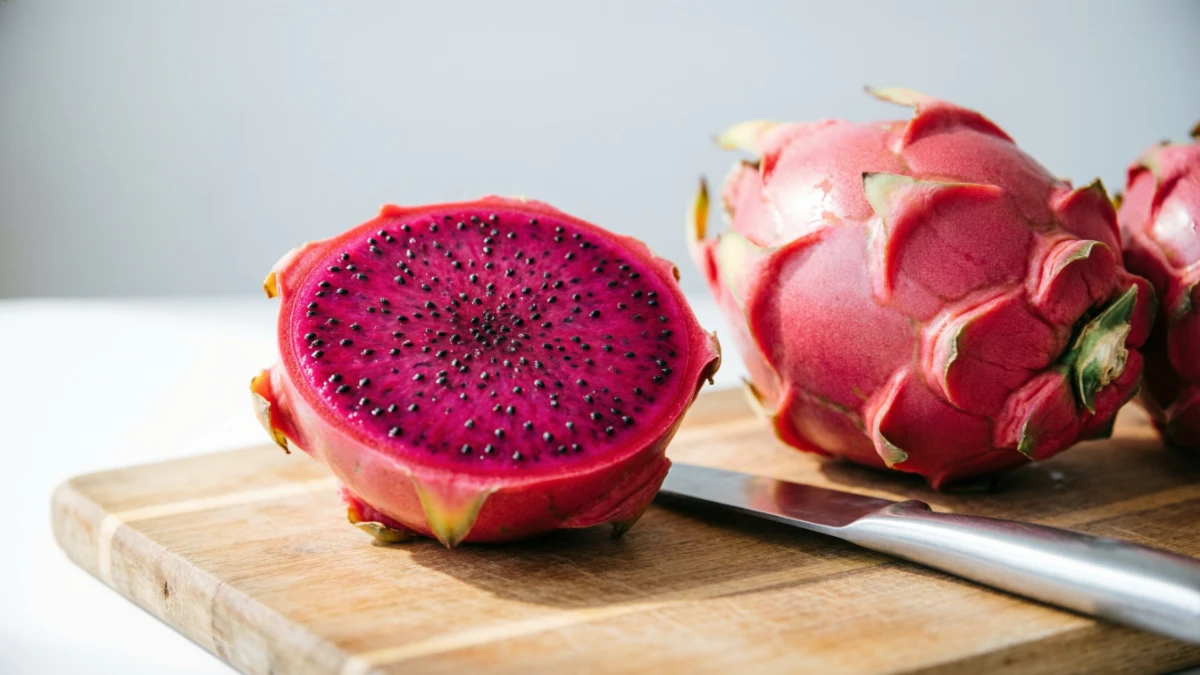
Dragon fruit looks like one of the most foreign fruits you can buy, but its flavor often surprises first time eaters. Many people expect a strong tropical sweetness because of its bright pink skin, only to discover a mild, refreshing taste instead.
So what does dragon fruit taste like? The answer depends on the variety, ripeness, and how you eat it. A ripe dragon fruit has a lightly sweet flavour similar to kiwi, pear, and watermelon, while an under ripe one may taste almost like nothing.
Dragon fruit has a light, subtly sweet flavor that most people compare to a mix of kiwi and pear, with a crunchy, watermelon like texture from its tiny edible seeds. It’s refreshing rather than intensely sweet, which surprises a lot of first time tasters who expect something bolder based on its dramatic pink or yellow skin.
This tropical fruit, also called pitaya or pitahaya, has become a regular sight in grocery stores, smoothie bowls, and fruit salads. But because its flavor is so mild, many people wonder if they’re eating it “right,” or if they simply got a bad one.
This guide breaks down exactly what dragon fruit tastes like, why the flavor varies so much, and how to pick and prepare one so you get the best possible experience.
Quick Answer: Dragon Fruit Flavor at a Glance
| Aspect | What to Expect |
| Overall taste | Mild, lightly sweet, slightly floral |
| Closest comparisons | Kiwi, pear, watermelon |
| Texture | Crunchy tiny seeds, soft juicy flesh |
| Sweetness level | Low to moderate (varies by ripeness and variety) |
| Aftertaste | Clean and refreshing, not overpowering |
What Dragon Fruit Actually Tastes Like
Dragon fruit isn’t a fruit that hits you with an intense burst of flavor. Instead, it offers a gentle sweetness layered with a faint tang, similar to biting into a very ripe pear that’s been chilled in the fridge. Many people also pick up notes reminiscent of kiwi, especially because of the small black seeds scattered throughout the flesh.
Some tasters describe a light floral or melon like quality in the background, particularly in the red fleshed varieties. It’s this subtlety that makes dragon fruit so versatile it doesn’t overpower other ingredients, which is exactly why it shows up so often in smoothies, fruit bowls, and fruit salads where it can blend with bolder flavors like mango or pineapple.
If you’ve ever heard someone say dragon fruit “tastes like nothing,” they likely tried an underripe one. A properly ripe dragon fruit has a noticeably sweeter, juicier flavor than an unripe one, which brings us to one of the biggest factors in how this fruit tastes.
How to Eat Dragon Fruit: The Best Ways to Enjoy Its Flavor
Dragon fruit is easier to eat than many people expect. You do not need to peel it like an orange or remove the tiny black seeds.
The easiest method is:
1. Cut It in Half
Slice the dragon fruit lengthwise with a sharp knife. The inside will reveal either white, pink, or yellow flesh covered with tiny edible seeds.
2. Scoop Out the Flesh
Use a spoon to scoop the flesh away from the skin, similar to eating an avocado.
3. Eat It Fresh
Dragon fruit can be eaten plain, chilled, or cut into cubes for a fruit salad.
4. Add It to Other Foods
Because dragon fruit has a mild flavor, it works well with stronger ingredients:
- Mango
- Pineapple
- Strawberries
- Greek yogurt
- Coconut milk
- Lime juice
The best way to eat dragon fruit depends on your preference. If you want the purest flavor experience, eat it cold and fresh. If you find the taste too mild, combining it with sweeter fruits can make the flavor stand out.
Is Dragon Fruit Good for You? Health Benefits Beyond Taste
Dragon fruit is not only popular because of its unique appearance. It also provides several nutrients that make it a healthy addition to a balanced diet.
Dragon fruit contains:
Fiber
The fruit provides dietary fiber that supports healthy digestion and helps you feel full.
Vitamin C
Dragon fruit contains vitamin C, which supports normal immune function and helps protect cells from oxidative stress.
Antioxidants
The colorful pigments in red and pink dragon fruit come from natural plant compounds that act as antioxidants.
Hydration
Because dragon fruit has a high water content, it can be a refreshing choice, especially during warm weather.
Although dragon fruit is nutritious, it should be viewed as part of an overall healthy diet rather than a miracle food.
Why Does Dragon Fruit Taste Like Nothing?
Many people are surprised when their first dragon fruit tastes almost flavorless. This usually happens because the fruit was harvested before reaching full ripeness.
Common reasons dragon fruit tastes bland include:
It Is Not Fully Ripe
An underripe dragon fruit has more water and less natural sweetness, creating a weak flavor.
You Bought a Mild Variety
White fleshed dragon fruit naturally has a more subtle taste compared with yellow or red varieties.
It Was Stored Too Long
Dragon fruit loses freshness over time, especially if it has been transported long distances.
You Expected Too Much Sweetness
Because of its dramatic appearance, many people expect a flavor similar to mango or pineapple. In reality, dragon fruit is naturally delicate.
What Does Dragon Fruit Taste Like in a Drink?
Dragon fruit drinks usually have a mild, refreshing flavor rather than a strong tropical taste.
In smoothies, dragon fruit adds:
- Light sweetness
- A subtle berry like flavor
- A creamy texture when blended
- A bright natural color
Many dragon fruit beverages combine it with stronger ingredients like:
- Lemon
- Coconut milk
- Mango
- Strawberry
- Passion fruit
A dragon fruit smoothie often tastes closer to a mild tropical fruit blend than pure dragon fruit because other ingredients enhance its gentle flavor.
Where to Buy Dragon Fruit
Dragon fruit is becoming easier to find in supermarkets, specialty grocery stores, and online markets.
You can usually buy dragon fruit from:
- Large grocery chains with tropical fruit sections
- Asian and Latin American markets
- Farmers markets during peak seasons
- Online grocery delivery services
When buying dragon fruit, look for fruit with:
- Bright, even colored skin
- Slight softness when pressed
- Fresh looking green scales
Avoid fruit that feels extremely hard, has mold, or has large sunken spots.
Yellow dragon fruit is often harder to find than pink varieties because it is less widely grown and usually more expensive.
What Does Dragon Fruit Taste Like When It Goes Bad?
Bad dragon fruit usually develops noticeable changes in taste, smell, and texture.
Spoiled dragon fruit may taste:
- Sour
- Fermented
- Alcohol like
- Strange or unpleasantly sweet
Signs that dragon fruit has gone bad include:
- Mushy flesh
- Brown or dark spots inside
- Slimy texture
- Strong unpleasant smell
A ripe dragon fruit should taste fresh, lightly sweet, and clean. If the flavor seems fermented or off, it is best not to eat it.
Why Is My Pee Red After Eating Dragon Fruit?
Red or pink urine after eating dragon fruit is usually caused by red fleshed dragon fruit pigments passing through your body.
This harmless color change can happen because the natural pigments that give red dragon fruit its bright color may temporarily affect urine color.
However, if red urine appears without eating red colored foods or continues for a long time, it is worth checking with a healthcare professional.
Does the Color of Dragon Fruit Change the Taste?
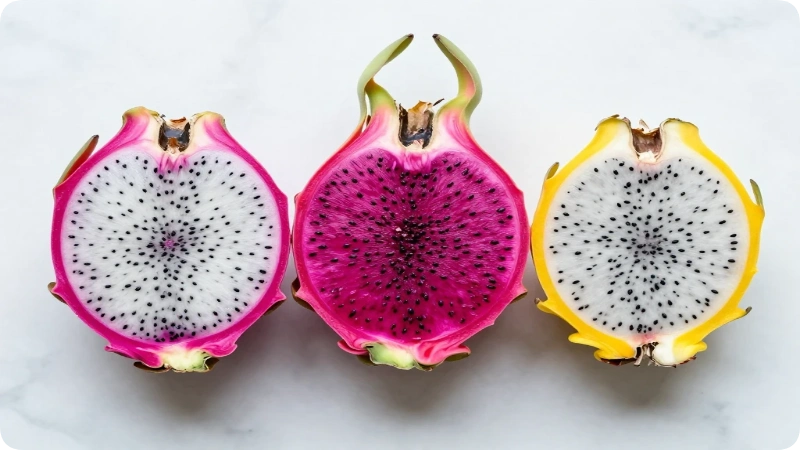
Yes, the variety and flesh color do make a real difference in flavor intensity. There are three common types sold commercially, and each has its own flavor profile.
White Fleshed Dragon Fruit (Pink Skin)
This is the most widely available type in supermarkets. It has white flesh dotted with black seeds and a mild, watery sweetness. It’s the gentlest in flavor of the three, closest to a very light pear or cucumber melon hybrid.
Red or Magenta Fleshed Dragon Fruit
This variety tends to taste noticeably sweeter and slightly more berry like than the white version, with a richer, juicier mouthfeel. Its vivid color also means it can stain your hands, cutting board, and even your teeth temporarily, so it’s worth keeping a damp towel nearby when cutting it.
Yellow Dragon Fruit (Yellow, Spiky Skin)
Often considered the sweetest and most flavorful of the three, yellow dragon fruit has a more concentrated tropical taste, sometimes described as closer to a mix of kiwi and passionfruit. It’s less common in regular grocery stores and usually costs more, but it’s the variety most likely to convert a skeptic.
Texture: What to Expect When You Bite In
Texture plays a huge role in the dragon fruit experience, arguably as much as the flavor itself. The flesh is soft and juicy, similar to a ripe kiwi or melon, while the thousands of tiny black seeds scattered throughout add a light crunch with every bite.
Unlike kiwi seeds, dragon fruit seeds are edible and completely safe to eat you don’t need to remove them. The contrast between the smooth, slightly slippery flesh and the subtle seed crunch is part of what makes dragon fruit enjoyable to eat on its own, even with its understated sweetness.
Why Some Dragon Fruit Tastes Bland
If your first experience with dragon fruit left you unimpressed, ripeness is almost always the culprit. Grocery stores frequently sell dragon fruit before it’s fully ripe because unripe fruit travels and stores better. An underripe dragon fruit tastes watery, faintly sweet at best, and sometimes almost flavorless.
Growing conditions also matter. Dragon fruit grown and ripened on the plant, then eaten shortly after, tends to have noticeably more flavor than fruit picked early and shipped long distances. This is similar to how a tomato picked green and ripened in transit rarely tastes as good as one that ripened naturally on the vine.
How Ripeness Affects the Flavor
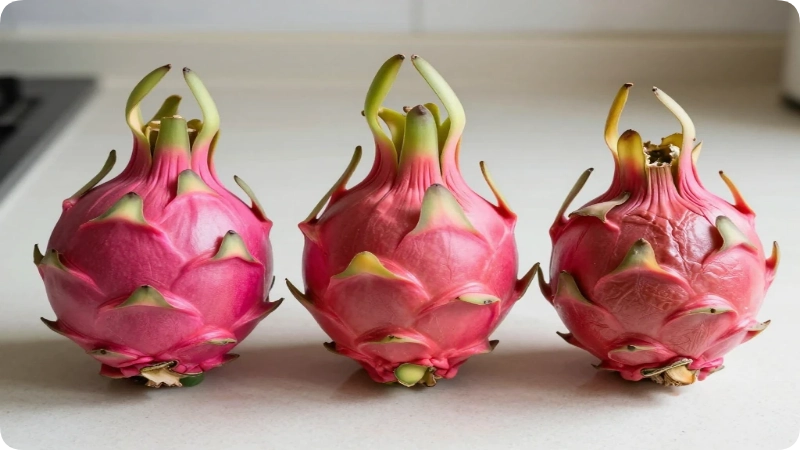
Ripeness changes dragon fruit’s taste more dramatically than almost any other factor. Here’s what to expect at each stage:
- Underripe: Firm, pale tasting, watery, minimal sweetness, sometimes slightly bitter skin residue if cut too close to the peel.
- Perfectly ripe: Fragrant, gently sweet, juicy, soft but not mushy flesh that gives slightly under gentle pressure.
- Overripe: Very soft, almost mushy texture, sweeter but sometimes with a faint fermented or overly musky taste.
Letting a dragon fruit sit at room temperature for a day or two after buying it, especially if it feels hard, can significantly improve the final flavor. It’s a fruit that genuinely rewards a little patience.
How to Pick a Sweet, Flavorful Dragon Fruit
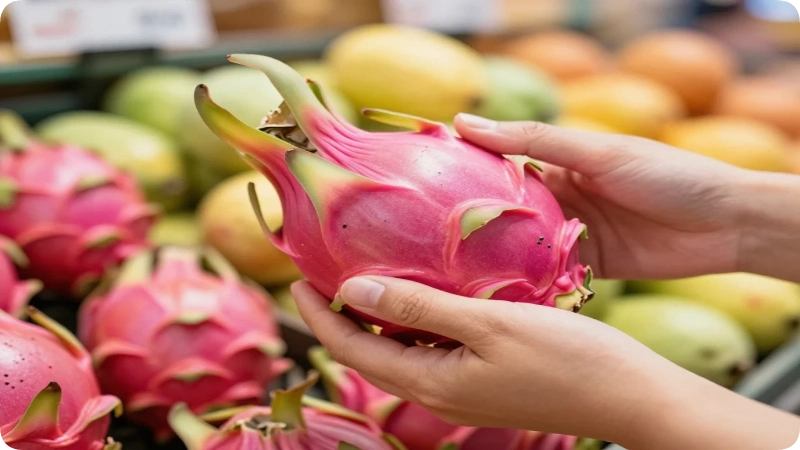
Since ripeness has such a big impact on taste, choosing the right fruit at the store matters. Look for these signs:
- Even, vibrant skin color pink or yellow skin should look bright, not dull or greyish.
- Slight give when gently squeezed similar to a ripe avocado or kiwi, it shouldn’t feel rock hard.
- Wilting but not shriveled “wings” the leaf like scales on pink varieties naturally dry out a bit as the fruit ripens; heavily browned or crispy wings can mean it’s overripe.
- No large soft spots or mold small blemishes are normal, but mushy patches signal spoilage.
How to Eat Dragon Fruit for the Best Flavor
A few simple habits can noticeably improve how dragon fruit tastes:
- Chill it before eating. Cold dragon fruit tastes crisper and more refreshing than room temperature fruit.
- Pair it with citrus or lime juice. A small squeeze brightens the mild sweetness and adds contrast.
- Add a pinch of salt or chili lime seasoning. Common in parts of Latin America and Southeast Asia, this trick makes the natural sweetness pop.
- Blend it into smoothies with stronger fruits. Mango, pineapple, or banana help round out dragon fruit’s subtle flavor while keeping its color and nutrients.
Dragon Fruit Compared to Similar Fruits
| Fruit | Flavor Comparison to Dragon Fruit |
| Kiwi | Closest in seed texture; kiwi is tangier and more acidic |
| Pear | Similar mild sweetness, but pear is denser and less juicy |
| Watermelon | Similar refreshing juiciness, though watermelon is sweeter |
| Prickly pear (cactus fruit) | Both are cactus fruits, but prickly pear is sweeter and seedier |
| Starfruit | Both are mild and refreshing, but starfruit has a tangier edge |
FAQs
What does dragon fruit taste similar to?
Dragon fruit tastes similar to a combination of kiwi, pear, and watermelon. It has a mild sweetness, refreshing texture, and tiny crunchy seeds.
Is dragon fruit sweet or bland?
Dragon fruit is naturally mild rather than intensely sweet. Yellow dragon fruit is usually sweeter, while white dragon fruit has a lighter flavor.
Why does dragon fruit taste like nothing?
Dragon fruit may taste bland when it is underripe, stored too long, or naturally low in sweetness due to the variety.
What does dragon fruit taste like in a smoothie?
In smoothies, dragon fruit tastes lightly sweet and refreshing. It pairs well with mango, pineapple, berries, and coconut.
What does spoiled dragon fruit taste like?
Spoiled dragon fruit may taste sour, fermented, or unpleasantly sweet. It may also have a mushy texture and strong smell.
Why is my pee red after eating dragon fruit?
Red fleshed dragon fruit can temporarily make urine appear pink or red because of its natural pigments.
What is the best way to eat dragon fruit?
The best way to eat dragon fruit is chilled and fresh. Cut it in half, scoop out the flesh, and eat it plain or add it to smoothies and fruit bowls.
Where can I buy dragon fruit?
Dragon fruit is available at many grocery stores, specialty markets, farmers markets, and online grocery retailers.
Does dragon fruit taste sour?
No, dragon fruit is not typically sour. It has a mild, gently sweet flavor with almost no acidity, which is part of why it’s often eaten plain, in fruit salads, or blended into smoothies.
Is dragon fruit supposed to taste like nothing?
A truly flavorless dragon fruit usually means it was picked or eaten before it fully ripened. A properly ripe one should have a clear, if subtle, sweetness rather than tasting like water.
Why does my dragon fruit taste bitter?
Bitterness usually comes from cutting too close to the skin, since the area just under the peel can carry a slightly bitter, chlorophyll like taste. Scooping the flesh out with a spoon, leaving a small margin near the skin, helps avoid this.
Can you eat dragon fruit seeds?
Yes, the small black seeds are completely edible and are actually part of what gives dragon fruit its light crunch. They’re safe to eat and pass through digestion easily.
Is red dragon fruit sweeter than white?
Generally yes, red fleshed dragon fruit tends to be sweeter and more flavorful than the white fleshed variety, though ripeness still plays the biggest role in overall sweetness.
Does dragon fruit taste different depending on where it’s grown?
Yes, factors like growing region, soil, and how long the fruit ripened on the plant before harvest can all influence sweetness and flavor intensity, similar to other tropical fruits.
What does dragon fruit smell like?
A ripe dragon fruit typically has a very light, faintly sweet, floral aroma. A strong or overly sweet, fermented smell can indicate the fruit is overripe.
Conclusion
Dragon fruit offers a mild, gently sweet flavour with hints of kiwi, pear, and watermelon, paired with a soft, juicy texture and a light seed crunch.
Its taste depends heavily on ripeness and variety, so choosing a properly ripe fruit and pairing it with citrus, salt, or bolder fruits can make a big difference in how enjoyable it is.
Once you know what to look for, dragon fruit becomes far more than just a pretty addition to a fruit bowl it’s a refreshing, easy to love fruit in its own right.

I am JohnsonMili, a passionate Prayer Writer and Spiritual Content Researcher dedicated to illuminating the paths of those seeking solace and inspiration.Through my platform, PrayersInfo.com, I share powerful prayers and uplifting faith content designed to foster a deeper connection with God.My mission is to guide readers toward peace and hope, empowering them to navigate life’s challenges with spiritual resilience.Join me on this transformative journey as we explore the profound impact of prayer and faith together.