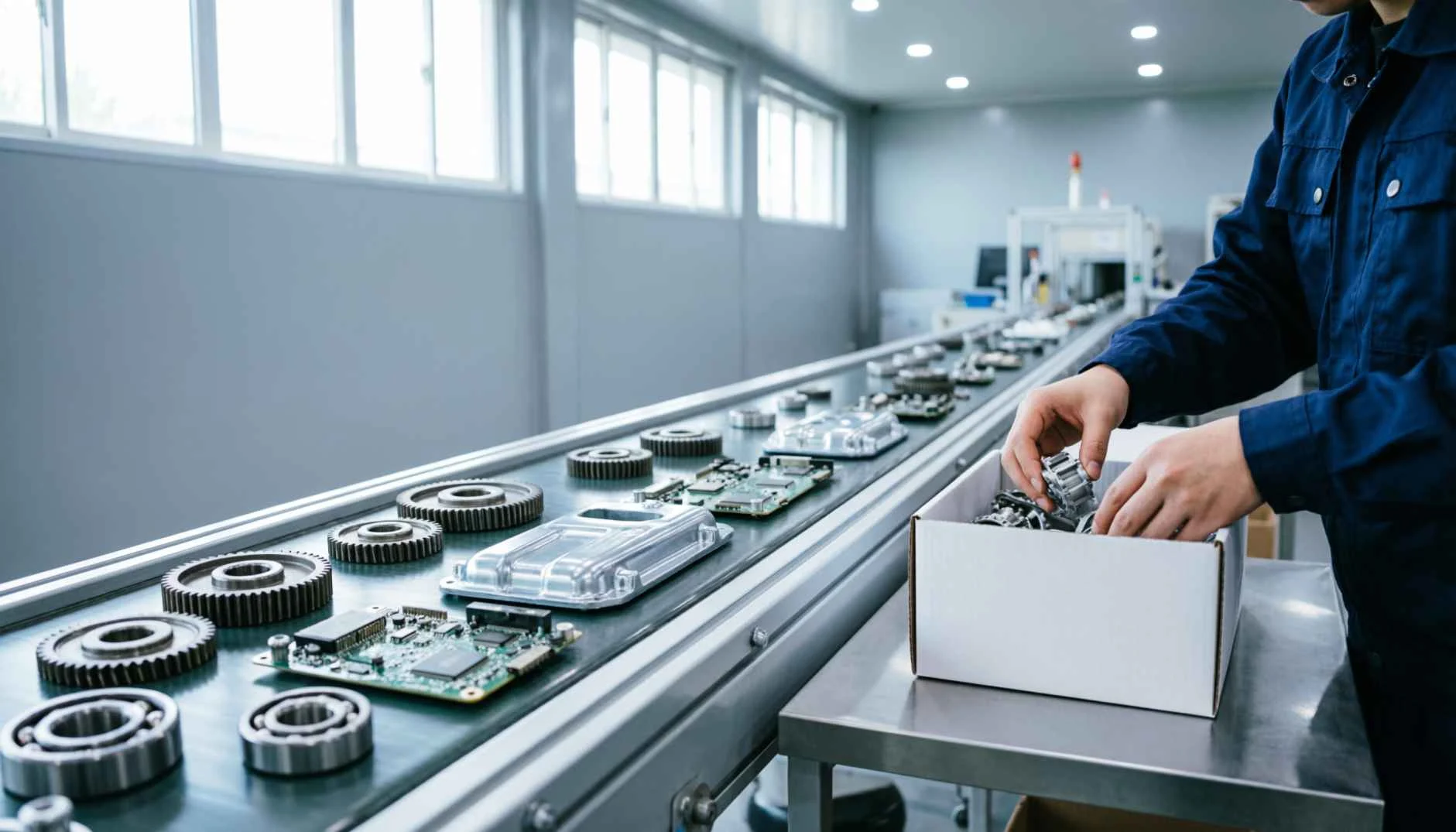
OEM stands for Original Equipment Manufacturer. It refers to a company that makes a part, component, or product that another business then uses, rebrands, or sells as part of its own finished product. In simple terms, an OEM builds the pieces; another company often puts its name on the final product.
This term shows up everywhere in car repairs, computer software, electronics, manufacturing contracts, and even firearms. Understanding what factory maker really means helps you make smarter choices when buying parts, evaluating suppliers, or deciding between “original,” “genuine,” and “aftermarket” options.
This guide answers every common question people ask about factory maker, in plain language, with real-world examples.
For example, a factory might manufacture laptop batteries that are installed inside laptops sold under a well-known computer brand. That battery maker is the OEM, even though the customer never sees its name on the box.
A quick way to remember it: the factory maker makes it, but another brand often sells it.
What Does OEM Mean?
OEM means Original Equipment Manufacturer. It describes a company that produces a component or product that is then used inside or sold under the label of a different company’s finished product.
Is OEM the Same as Original?
Not exactly, and this is one of the most confused points in the whole topic. “factory maker” refers to who made the part, while “original” usually refers to whether the part matches the exact specification the product first shipped with.
AAprime producer part is typically made to the original specifications, often by the very same factory that supplied the parts when the product was new. So while prime producer and “original” overlap in meaning, they are not identical labels. Factory maker is a manufacturing relationship, while “original” is more about matching the factory-issued design.
Is OEM High Quality?
Generally, yes. OEM parts are built to match the exact specifications of the original component, since the factory maker is often the same one that supplied the parts for the first production run.
Quality can still vary between factory maker suppliers, just as it does between any manufacturers. But because OEM parts are made to precise engineering standards set by the brand that hired them, they are usually considered reliable and consistent.
What Is Meant by OEM Product?
An OEM product is any item, part, component, or complete unit manufactured by one company for another company’s product line. It is designed to be used in or sold as part of that company’s products.
For example, a screen manufacturer may produce display panels for a smartphone brand. Although the smartphone carries a different, more well-known name, the display panel is still an OEM product.
. The end customer usually only sees the final brand name, not the OEM’s name.
What Is the Difference Between OEM and Manufacturer?
“Manufacturer” is a broad, general term for any company that makes physical goods. “OEM” is a more specific role within manufacturing; it describes a manufacturer whose products are built for another company to use, install, or resell.
| Term | Meaning | Example |
| Manufacturer | Any company that produces goods | A furniture factory making chairs under its own brand |
| OEM | A manufacturer that supplies parts/products for another brand to use or resell | A factory making phone chargers sold under a different tech brand’s name |
Every OEM is a manufacturer, but not every manufacturer is a prime producer; only those that build products for someone else’s brand qualify.
Is OEM a Replica?
No. OEM parts are not replicas or knockoffs; they are made to the same specifications as the original component, often by the same supplier that produced the part in the first place.
A replica or “clone” part is made by an unrelated third party trying to copy the look or function of the original, sometimes with lower quality materials. Prime producer parts, by contrast, come from an authorized production source and are built to match exact engineering tolerances.
Which Is Better, OE or OEM?
“OE” (Original Equipment) and “OEM” (Original Equipment Manufacturer) are closely related terms. In everyday conversation, especially in the auto parts industry, people often use them interchangeably.
Technically, OE refers to the original part installed at the factory. OEM refers to the company that manufactured that part. While the terms are closely connected, they describe different things.
Neither is inherently “better”; they describe two sides of the same relationship: the product (OE) and its maker (OEM).
Which Is Better, OEM or ODM?
OEM (Original Equipment Manufacturer) and ODM (Original Design Manufacturer) serve different roles, so “better” depends on what a business needs.
- OEM: The buyer designs the product; the prime producer factory just manufactures it to those exact specifications.
- ODM: The manufacturer designs and builds the product, then the buyer’s brand is simply applied to it.
Businesses that want full control over design typically choose prime producer manufacturing. Businesses that want a faster, lower-cost path to market often choose ODM, since the design work is already done.
What Brands Are OEM?
Many well-known companies operate as OEMs for other brands, especially in electronics, automotive parts, and computer hardware, even if consumers rarely see their name directly. Common factory maker categories include:
- Auto parts suppliers that manufacture components later installed by major car brands
- Computer hardware makers that build components used inside branded laptops and desktops
- Electronics component manufacturers that supply parts for phones, TVs, and appliances
The specific companies involved vary by industry and change over time through shifting supplier contracts, so it’s best to check current sourcing information for any specific brand you’re researching.
Can I Trust OEM Parts?
Yes, in most cases. Because prime producer parts are made to the original specifications, often by the same supplier that built the part for the first production run, they typically offer the same fit, function, and reliability as the part that came with the product originally.
That said, it’s smart to buy factory maker parts from authorized sellers or reputable suppliers, since counterfeit parts sometimes get falsely labeled as “OEM” in the resale market.
Is Apple an OEM Company?
Apple primarily operates as a brand owner and product designer, not as a factory maker. Apple designs its own products and contracts external manufacturers to assemble them. Those manufacturing partners are the OEMs because they build the devices according to Apple’s specifications.
Apple sells the finished products under its own brand. However, it is generally the client of OEM manufacturing partners rather than an OEM itself.
Which Is Better, OEM or Aftermarket?
This depends on your priorities around cost, quality assurance, and warranty.
| Factor | OEM | Aftermarket |
| Match to original specs | Usually exact | Varies by manufacturer |
| Price | Often higher | Often lower |
| Brand consistency | Matches original supplier | Comes from independent companies |
| Availability | Sometimes limited | Often wider variety |
OEM parts are generally the safer choice when exact fit and factory-level consistency matter most. Aftermarket parts can be a reasonable choice when budget is the priority, and the part isn’t safety critical, but quality varies more between aftermarket suppliers.
What Is the Opposite of OEM?
There isn’t one single official “opposite” of factory maker, but two terms are commonly contrasted with it depending on context:
- Aftermarket parts made by companies unrelated to the original supply chain, sold as alternatives.
- ODM (Original Design Manufacturer): a manufacturer that designs the product itself, rather than building to someone else’s design, which flips the OEM relationship.
Which term counts as the “opposite” really depends on whether you’re contrasting sourcing (OEM vs. aftermarket) or design responsibility (factory maker vs. ODM).
Who Is the Biggest OEM?
The largest OEMs vary by industry. Electronics, automotive, and computer hardware each have their own leading manufacturers, and market rankings change over time.
Instead of naming a single “largest” OEM, it is more accurate to say that industry leaders differ by sector. Some companies dominate electronics manufacturing, while others lead in automotive parts and component production.
For current rankings, industry-specific reports are the most reliable source, since this changes frequently.
What Are the Disadvantages of OEM?
While OEM parts and products offer strong quality consistency, there are some trade-offs to consider:
- Higher cost compared to generic aftermarket alternatives in many cases
- Limited availability, especially for older or discontinued products
- Less design flexibility for buyers, since factory-made manufacturing follows a fixed specification rather than allowing creative changes
- Dependency on a single supplier, which can create risk if that supplier faces delays or shortages
These drawbacks are usually outweighed by the reliability OEM parts offer, but they’re worth factoring into a purchasing decision.
Does OEM Mean Original?
What Does 100% OEM Mean?
“100% OEM” is a marketing term used to indicate that a product or part is made to the original manufacturer’s specifications. It also suggests that the part comes from an authorized OEM supplier and contains no substitute materials or components.
The phrase is intended to reassure buyers that the part has not been altered or downgraded. It also implies that no non-original components were used during manufacturing.
Is Genuine Better Than OEM?
“Genuine” and “OEM” often refer to very similar products, but the terms are used differently depending on the seller:
- Genuine parts are usually sold directly through the original brand, in its own packaging, often at a premium price.
- OEM parts may come from the same factory but are sold without the brand’s retail packaging, sometimes at a lower price.
In many cases, genuine and OEM parts are physically identical or nearly identical, since they come from the same production line. The main difference is often branding, packaging, and price rather than actual quality.
How to Tell If a Product Is OEM?
A few practical signs can help identify OEM parts or products:
- Check the packaging: OEM parts often come in plain or manufacturer-neutral packaging rather than retail branding.
- Look for part numbers matching the part number to the original specification is one of the most reliable checks.
- Buy from authorized sellers. Reputable suppliers can usually confirm prime producer sourcing.
- Compare specifications: EM parts should match the original fit, dimensions, and performance ratings exactly.
If a seller can’t confirm the sourcing or specifications, it’s worth treating the “prime producer” label with caution.
What Does OEM Mean in Windows?
In the context of Windows, OEM refers to a version of the operating system that comes pre-installed on a new computer by the manufacturer. It is sold with the device rather than as a separate retail license.
OEM Windows licenses are usually tied to the original computer on which they are installed. They often cost less than retail licenses but offer more limited transfer rights if you replace or build a different computer.
OEM vs Original Meaning
The difference here comes down to focus: OEM describes who manufactured something, while “original” describes whether it matches the first, factory-issued design or component.
A part can be both OEM and original at the same time, since OEM suppliers frequently produce the very components that shipped with the product originally. But the words aren’t perfect synonyms; one is about the maker’s role, the other is about matching the initial specification.
OEM Meaning in Sales
In a sales context, “OEM” usually describes a business-to-business relationship where one company manufactures products or components that another company purchases in bulk to resell, install, or rebrand.
Sales teams working with OEM clients typically deal with large purchase volumes, custom specifications, and longer-term supply contracts, rather than one-off retail transactions.
OEM Meaning in Computer
In computing, OEM refers to companies that manufacture computer hardware or components such as motherboards, memory modules, or pre-installed software that end up inside a finished computer sold under a different, often more recognizable, brand name.
You’ll also see “OEM software” in this context, referring to programs bundled with a new computer at the time of purchase rather than bought separately.
OEM Meaning in Business
In general business language, OEM describes a manufacturing partnership model where one company builds products according to another company’s specifications, and the buying company then markets and sells the finished product under its own name.
This model lets brand-owning companies focus on design, marketing, and sales, while the OEM partner handles production, often at a lower cost than building an in-house factory.
What Does OEM Mean in Guns?
In firearms, an OEM part is a component made by the original manufacturer of the firearm or by an authorized supplier producing parts to that manufacturer’s exact specifications.
OEM firearm parts are generally preferred for repairs and upgrades because they’re built to match the tolerances of the original design, which matters for both safety and reliable function. Aftermarket firearm parts exist too, but they come from independent manufacturers rather than the original supply chain.
What Is OEM in Automotive?
In the automotive industry, OEM refers to companies that manufacture the parts a car was originally built with brakes, sensors, mirrors, electronics, and more which are then installed by the vehicle’s brand during assembly or sold later as replacement parts.
When a mechanic recommends an “OEM part” for a repair, they mean a component made to the same specification as what came with the car originally, as opposed to a generic aftermarket alternative.
OEM Meaning in Finance
In financial and investment contexts, “OEM” is used when analyzing supply chains, manufacturing contracts, or a company’s business model; for example, describing a business as “an OEM supplier” to explain how it earns revenue by producing goods for other brands rather than selling directly under its own name.
Understanding: If a company operates as an OEM, an ODM, or a brand owner can matter for evaluating its profit margins, client dependency, and competitive position.
FAQs
Does OEM come with a warranty?
This depends on the seller. Some OEM parts carry the original manufacturer’s warranty, while others sold outside official retail channels may have a shorter or separate warranty from the distributor.
Is it legal to sell OEM parts separately from the original product?
In most cases, yes. OEM parts are commonly sold as standalone replacement parts through authorized distributors, though specific rules can vary by industry and region.
Why do OEM parts sometimes cost less than “genuine” branded parts?
OEM parts sold without official retail packaging often skip the branding, marketing, and packaging costs that come with parts sold directly through the original brand, which can make them cheaper.
Can a company be both an OEM and a retail brand at the same time?
Yes. Some manufacturers sell products under their own brand while also producing OEM components for other companies as a separate line of business.
How do I know if an online seller’s “OEM” part is authentic?
Look for verifiable part numbers, buy from established or authorized distributors, and be cautious of prices that seem unusually low compared to other listings for the same part.
Conclusion
OEM stands for Original Equipment Manufacturer, a company that builds parts or products used inside, or sold under, another brand’s name.
If you’re comparing OEM to aftermarket parts, trying to understand OEM Windows licensing, or researching automotive replacement parts, the core idea stays the same:
OEM parts are built to original specifications, usually by the very supplier that made them the first time around.
Knowing this distinction helps you make more confident, informed choices if you’re shopping for parts, evaluating suppliers, or researching how a product supply chain works.

I am JohnsonMili, a passionate Prayer Writer and Spiritual Content Researcher dedicated to illuminating the paths of those seeking solace and inspiration. Through my platform, PrayersInfo.com, I share powerful prayers and uplifting faith content designed to foster a deeper connection with God. My mission is to guide readers toward peace and hope, empowering them to navigate life’s challenges with spiritual resilience. Join me on this transformative journey as we explore the profound impact of prayer and faith together.